

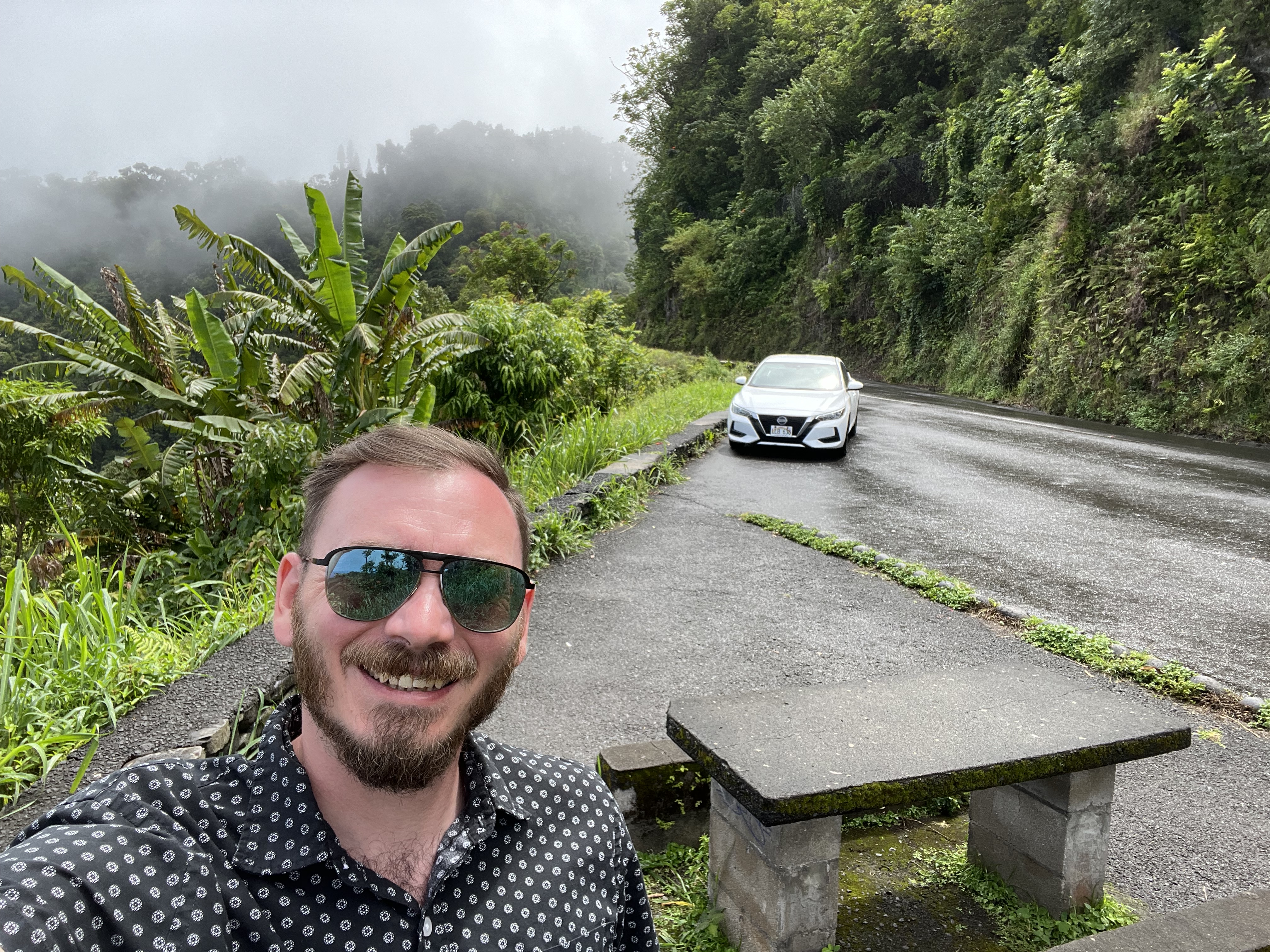
In September I was fortunate enough to attend the wedding of one of my best friends, on Maui. Would it have mattered if it wasn’t in Hawaii? Nah. But did it make a touching ceremony (and a hell of a reception) even better? Yup. I’d been meaning to visit this guy for a while, in fact I was going to fly out there in 2020 but then 2020, y’know, happened (and was followed by the next four years).
But it was worth the wait: Maui is a spectacular introduction to the Hawaiian islands, with fun camping, incredible hiking, a thrilling cliff-side drive through the jungle, delectable seafood, pristine beaches and an atmosphere that encourages a reverential and profound relationship with the natural world. Maui blends the chill of island time with a spirit of adventure.
Kuleana, and a visitor’s responsibility
Before I go dive into the trip, though, I’m going to address the obvious about visiting Hawaii. These islands, and the people who are native to them, have dealt with centuries of colonial oppression from European and American occupation. Hawaii has been turned into a destination, which means that its economy and residents rely heavily on tourism—but that doesn’t give tourists a free pass to act however they want here. Unlike other places in the United States, there are additional rules that have to be followed, and unique practices that should be observed. A good tourist does some research on how to be a good tourist and, in this case especially, on how to respect the land and its people. This might be a destination vacation for you, but for the Hawaiian people, this is their home. And it must be preserved.
Hawaiian culture is deeply rooted in the relationship between people and the land they inhabit, a wide-ranging concept called kuleana. At its center is (as I understand it) responsibility: to oneself and one’s community, but also to the land that one inhabits and/or visits. For the tourist, it means you have a responsibility to yourself, to the residents of this land and to the land itself to do no harm while you’re here. As I see it, this means that it’s okay to visit Hawaii, but you must respect it.
A far more detailed description of kuleana can be found here.
Camp Olowalu

The wedding and reception were held at Camp Olowalu, located on the west side of the island. It offers tent camping and tentalows (a tent-bungalow hybrid), and for groups (like ours) there’s an entire private section consisting of six A-frame cabins, a mess hall with a full kitchen and indoor meeting area, a firepit, courtyard and semi-private beach access.
Location-wise, you couldn’t ask for a better spot to spend a few days, nestled up between the shore and the mountains. I couldn’t complain about waking up to this view every day:


The cabins weren’t luxurious, but my only real complaint was the lack of AC. There’s a fan, and you can open the slats in the windows for some airflow, but even then it makes falling asleep difficult. It doesn’t help that the wild roosters that have flooded the island start up at three or four in the morning, well before the sunrise. I kept waking up with the thought: I swear I’m going to go out there and strangle those cocks. Otherwise, though, it’s a pretty good semi-glamping set up—at least there’s indoor plumbing, and so as long as I don’t have to use leaves as toilet paper, I consider it glamp.
(Also I got a cabin meant for six people all to myself!)

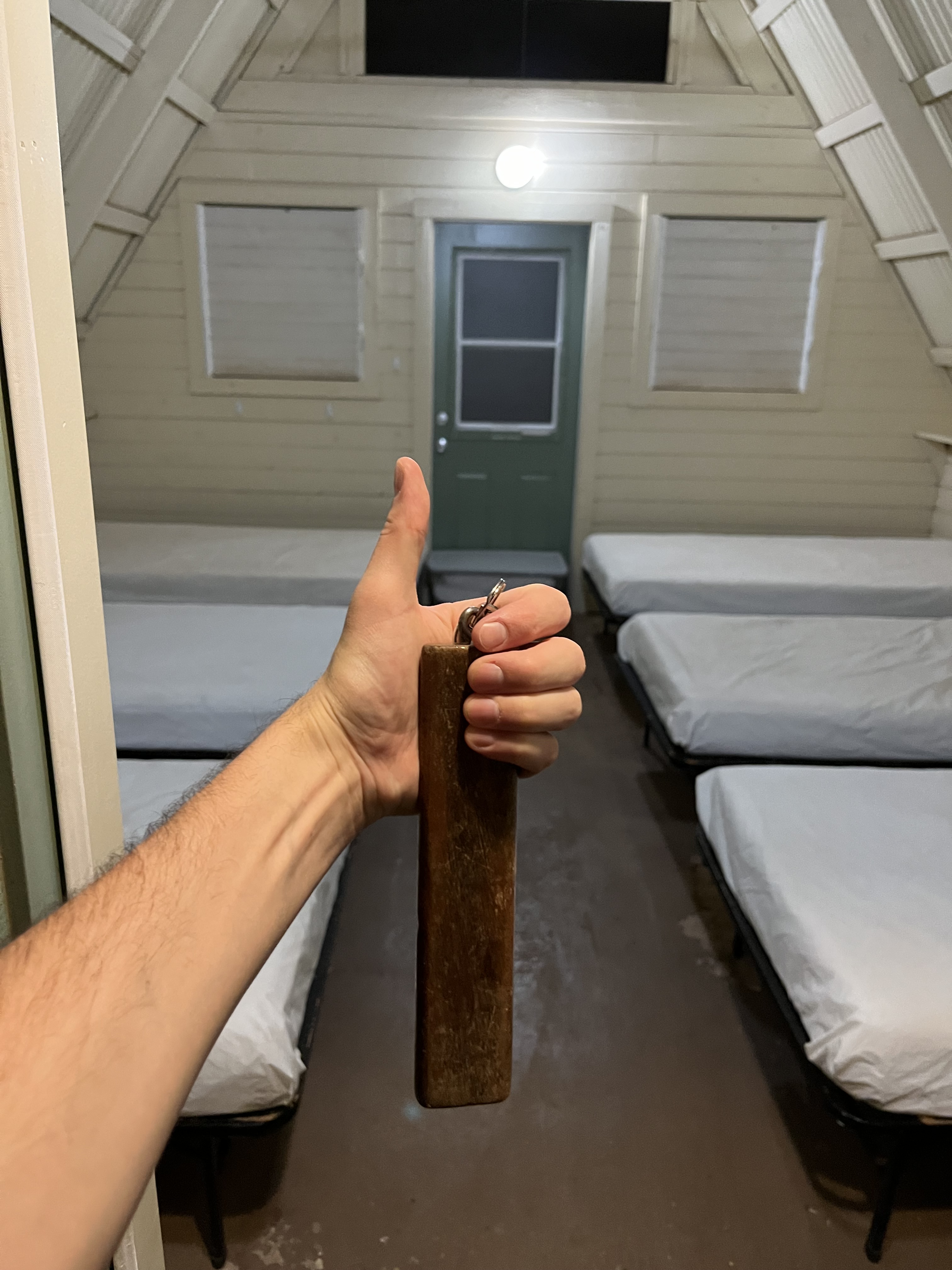
The semi-private beach is great, with stunning views of the mountains in one direction, and out over the water toward the islands of Lanai and Kaho’olawe (the latter being the uninhabited “bomb island”). The water is cool but not frigid (unlike a certain Lake Michigan), and the Olowalu Reef is located right off the shore, making for some cool snorkeling.
The mess hall is a great setup for putting together a wedding. It was actually built on a different part of the island in the 1940s, and used by the US military until the owners of the camp bought it and had it transported to its present location. I learned this tidbit from Tim, one of the caretakers at camp, who was instrumental in helping the wedding run smoothly (shoutout to Tim and the rest of the camp staff!).
Finally, the only acceptable way to end the night is sitting around the fire with a beer, good company, music playing off a Bluetooth speaker, and a view of a starry night so clear that you can make out the dusty cloud of the Milky Way.
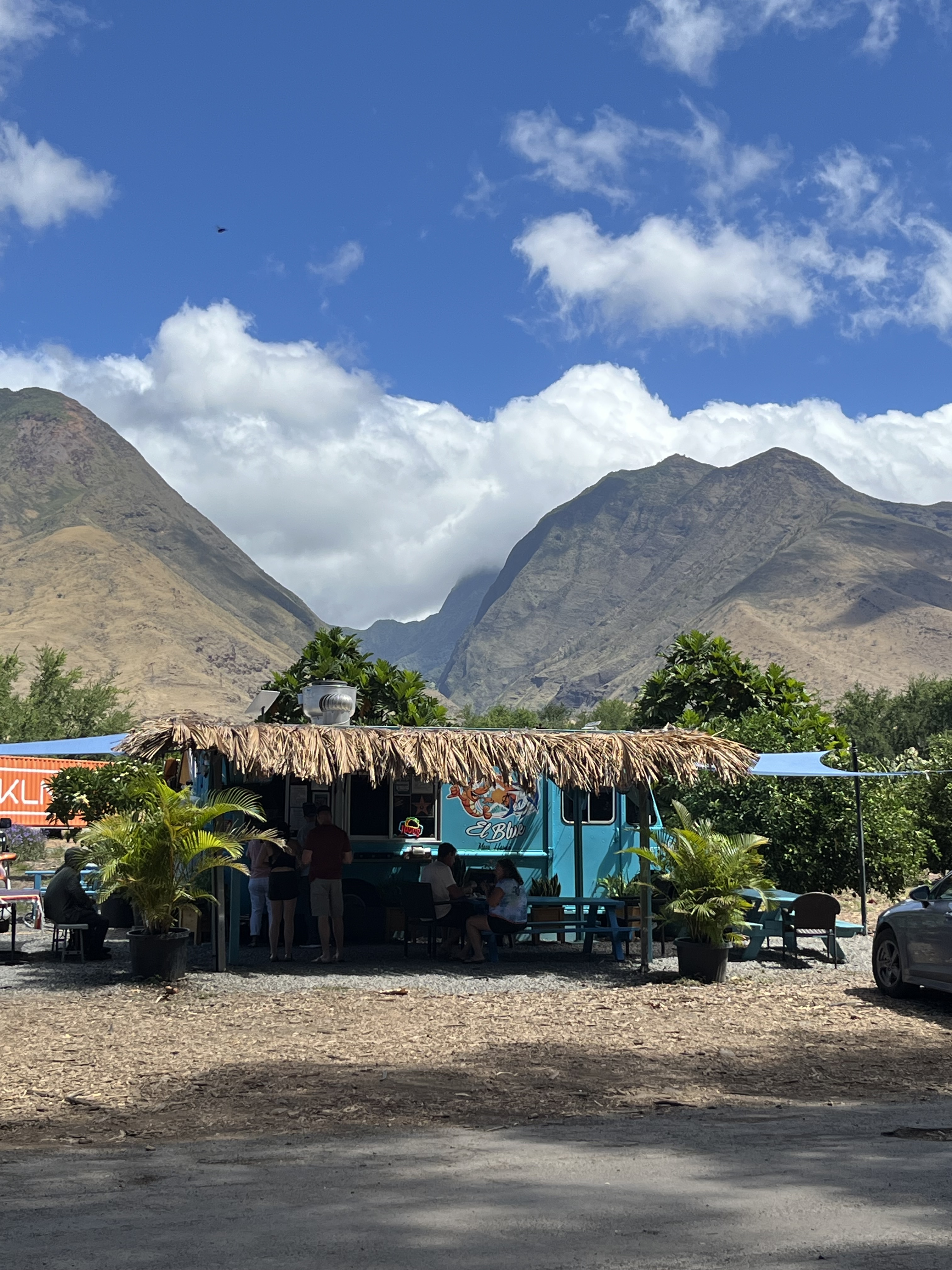
(Side note: right across the street is the Fish Tacos El Blue taco truck. They have the best carnitas tacos I’ve ever had in my life, and that’s not hyperbole.)
Haleakalā National Park
Taking up the entire east side of the island, Haleakalā is a shield volcano and national park that offers some incredible sights. Named “The House of the Sun” by the Hawaiians, it is a sacred site where, according to legend, the demigod Maui captured the sun.
It was also used as a tribal meeting place and, as the highest peak on the island with the clearest view of the nighttime sky, as the place where astronomers were trained in order to navigate by the stars while out at sea. The peak is still in use by astronomers today, with the world-famous observatory built and used by the University of Hawaii and the US Air Force to research and monitor the night sky.
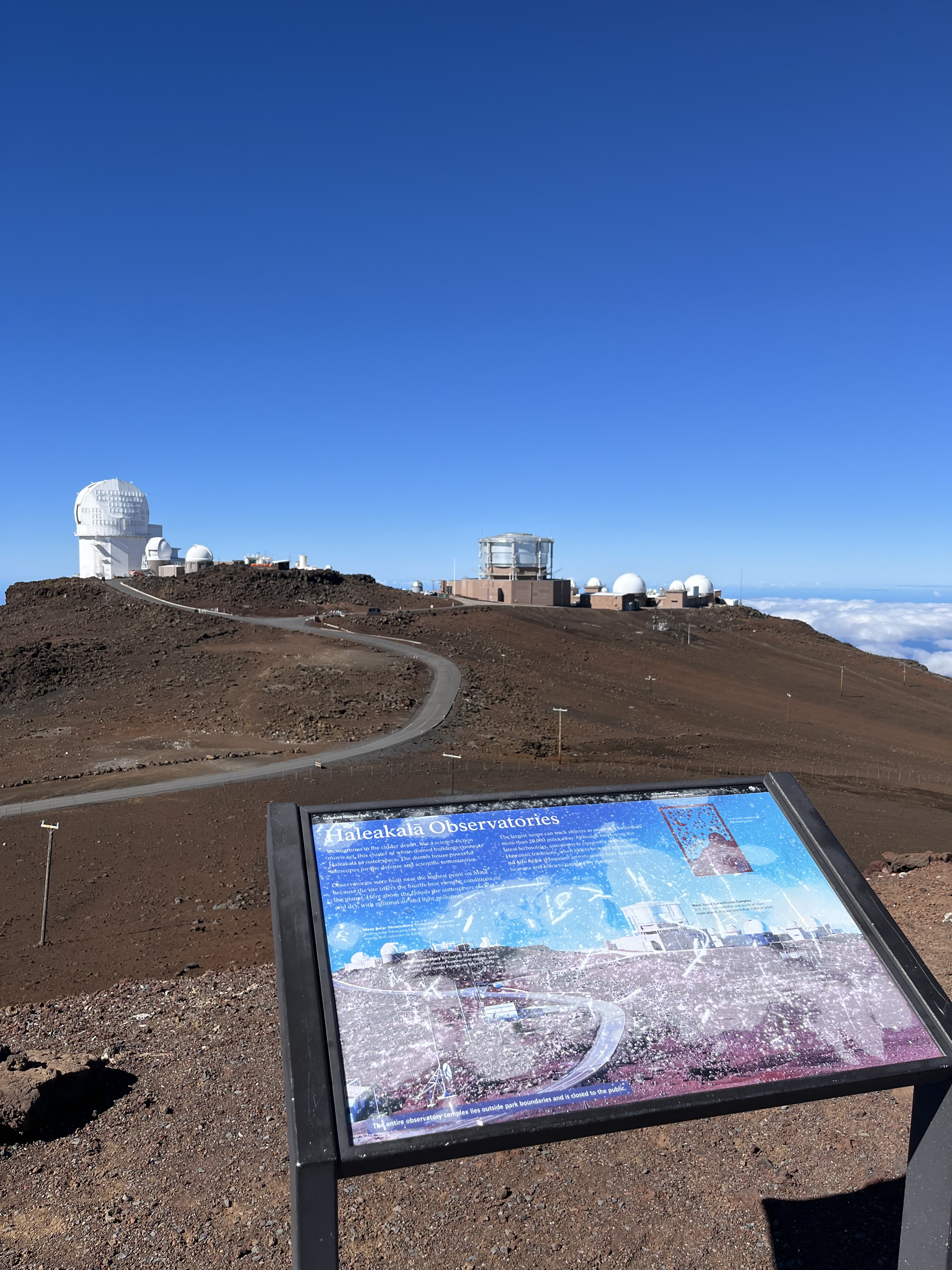
The presence of the observatory on sacred land has been controversial, with recent pushback against more telescopes being proposed for the summit. The ones that have been built stand like outposts on a desert planet, small human structures rising like growths or bone spurs from the skin of the mountain. As a science lover, I understand why they’re in use, but out of respect for the Hawaiian people, I side with the protest against further developing their sacred land.
Visiting the summit, it’s easy to understand how this place became so important to the Hawaiians. The drive up takes you up a long, winding road, passing from the subalpine environment on the midslope up to the alpine (desert) summit, located above the clouds. At 10,023 feet above sea level, you can start the drive at the beach (like I did) then reach 10,000 feet in about an hour and a half (which I also did), making it one of the quickest and most dramatic ascents in the world.
Once you pass over the clouds, you stare west, out across the island toward the western mountains:

South gives a view of the Big Island:
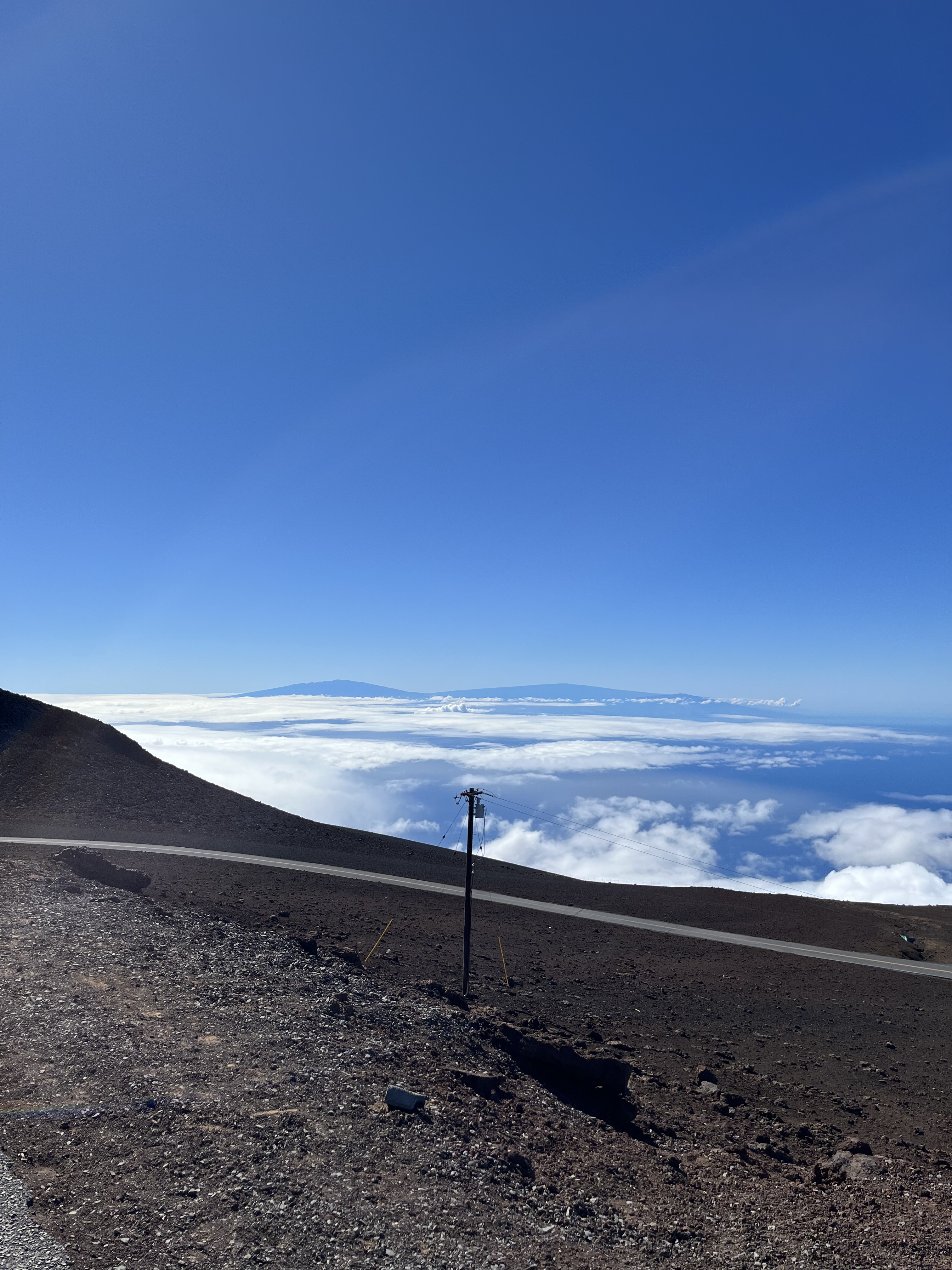
And to the north and east, the immense “crater” (technically not a crater, since it was formed by erosion) presents you with a view of stunning desolation and stillness. It stands in distinct contrast to the green slopes to the west, to the jungle northward and to the foamy clouds passing over it all. A heaviness weighs on the summit and inside the crater, unique and profound. The inside of crater is purported to be the quietest place in the natural world (which could be part of the reason I loved it so much).
Haleakalā is home to countless endemic—and endangered—species. Some of the most well known include:
-the nēnē birds, which once inhabited all of the islands but are now regulated to just a few spots on three of them,
-the āhinahina, or silversword plant, which has been threatened by rising temperatures as well as overgrazing from deer and feral goats and pigs,

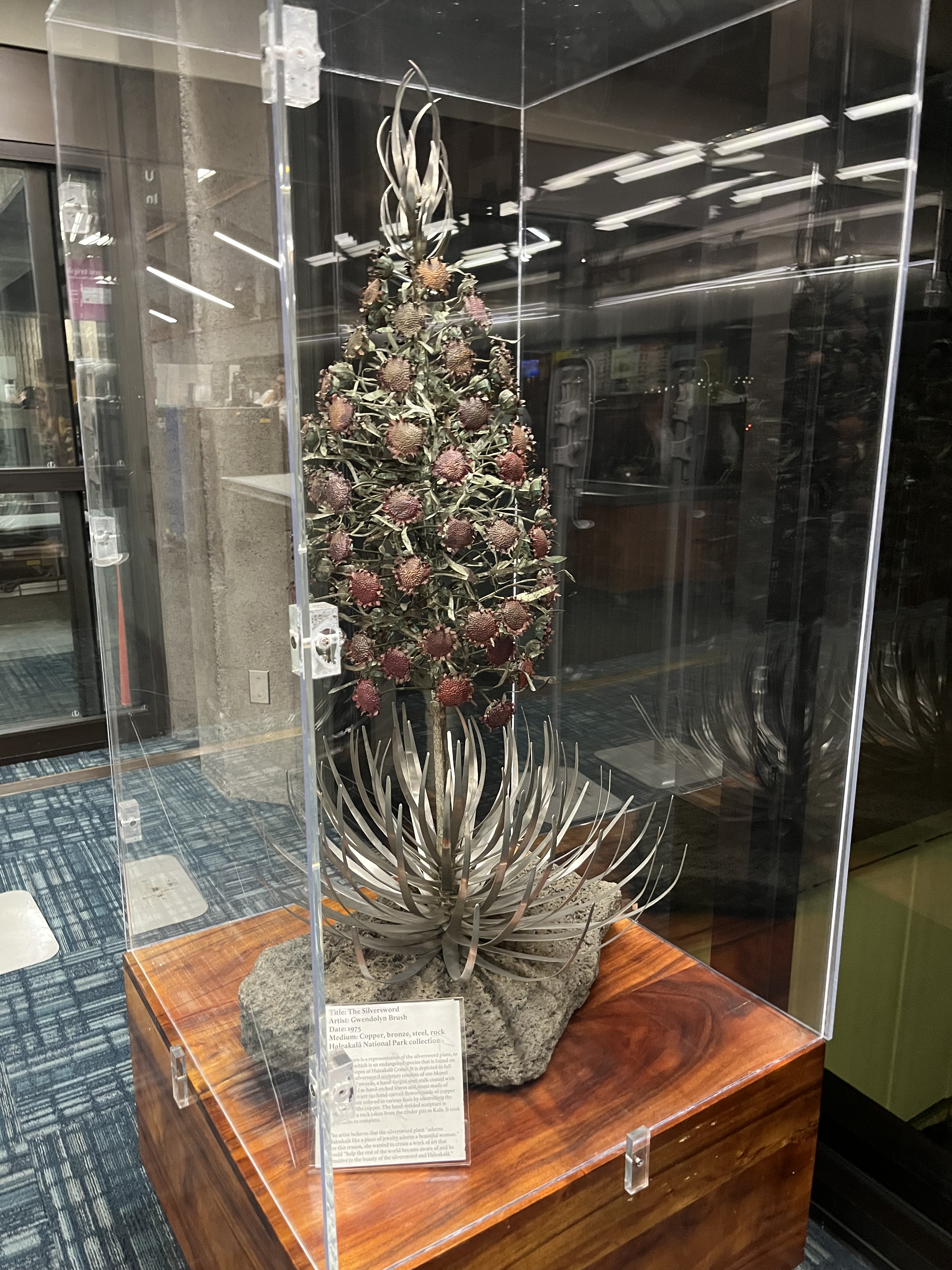
-and the Haleakalā flightless moth (hodegia apatela) that spends its entire life living under rocks.
The National Park Service protects 103 endangered species here, across the Summit and Kīpahulu Districts that make up the park, from the threats of climate change (including the ever-present risk of wildfires), as well as from invasive grazing species and any careless tourists. While it’s important to respect the land everywhere on the islands, the sense of ecological delicacy you feel at Haleakalā is maybe the strongest: signs are posted everywhere to remind you not to touch anything, because some of these species (like the rock moth, whose environment for their entire species is located on just a small part of the summit) can be so easily and irreparably damaged.

Which isn’t meant to make anyone who wants to visit anxious, but instead to reinforce the tenet of kuleana: when you visit a place, you assume the responsibility of protecting it. In a place as delicate, and sacred, as Haleakalā, this is particularly true.
The mountain is the center of the environmental and meteorological layout of Maui. Tradewinds blow inland from the northeast, slamming up against the northern and eastern slopes of Haleakalā, where they deposit rain and moisture that leaves the area lush and jungled. However, not as many clouds make it over or around those slopes, which leaves the rest of the island relatively dry. Meaning that, just as you can watch the clouds below you from the summit, you can drive down under that cover and let the clouds pass over you, which is a surreal experience. You’ll go from this:
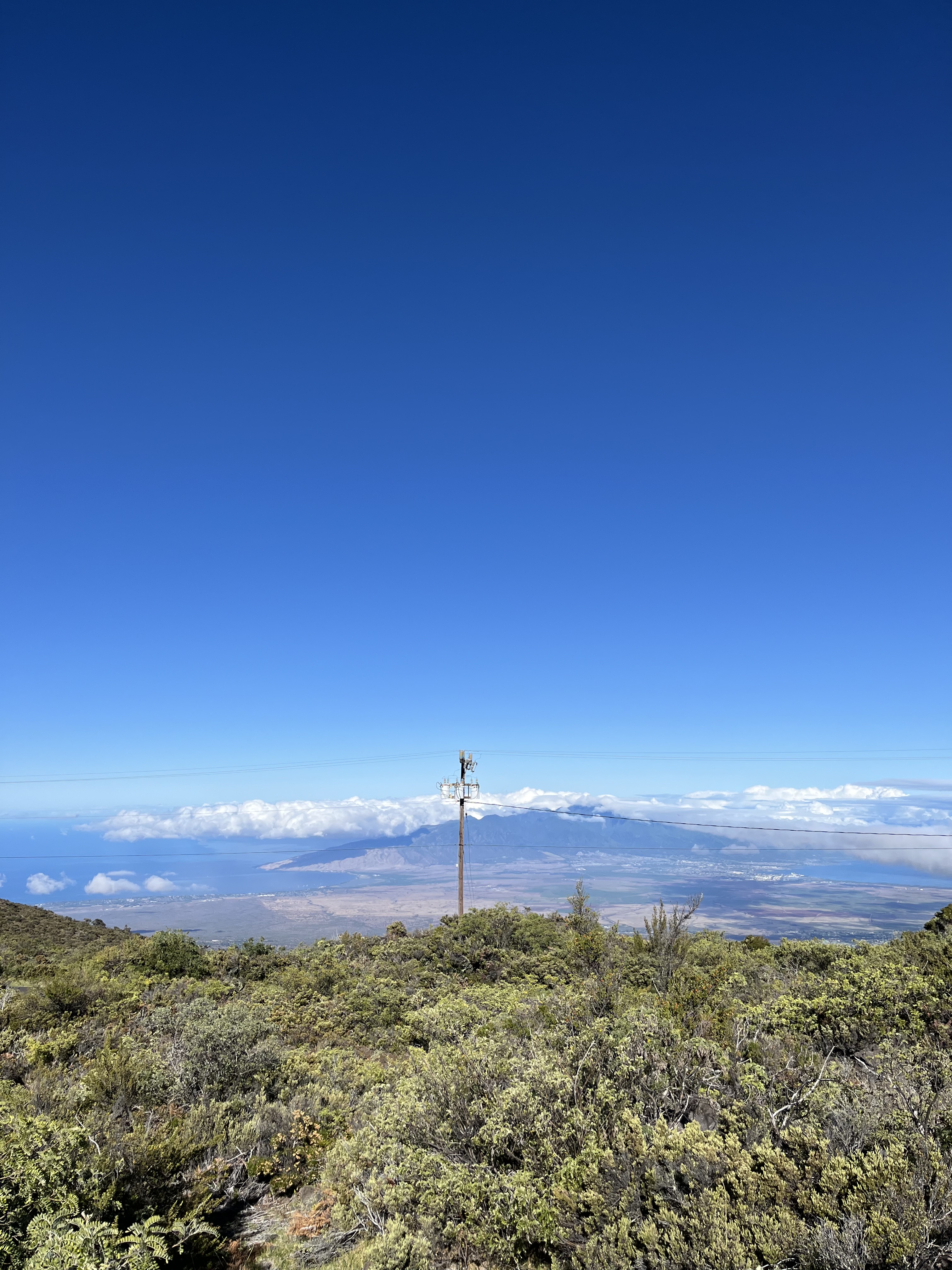
To this:
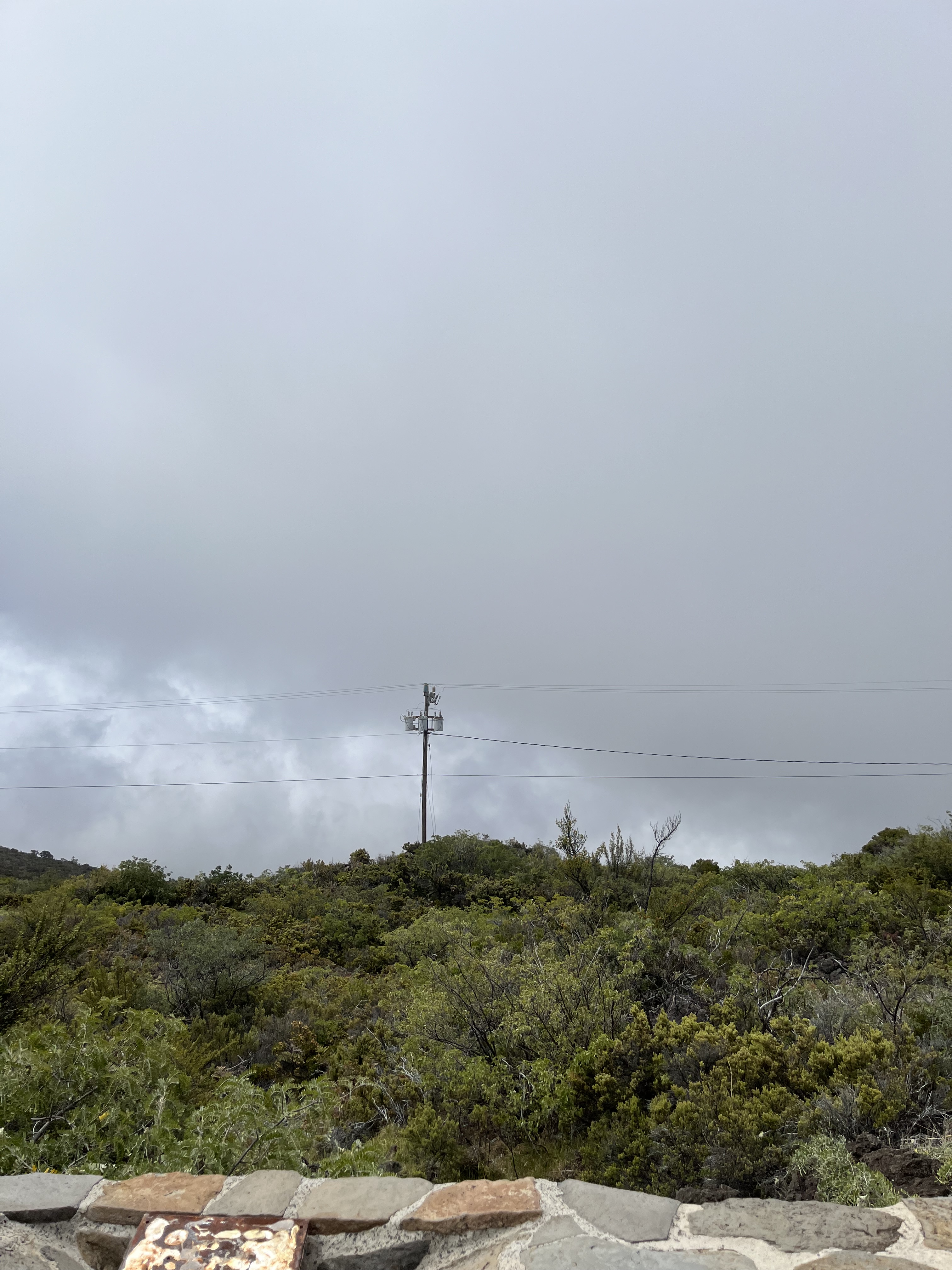
And back in just a few minutes, throughout the day.
Unfortunately, being at 10,000 feet while hiking up and down the trails resulted in me getting altitude sickness, which was why I was sitting back down under the transient clouds in the first place. So with that, it was time to go back down, to visit the jungle.
The Road to Hana

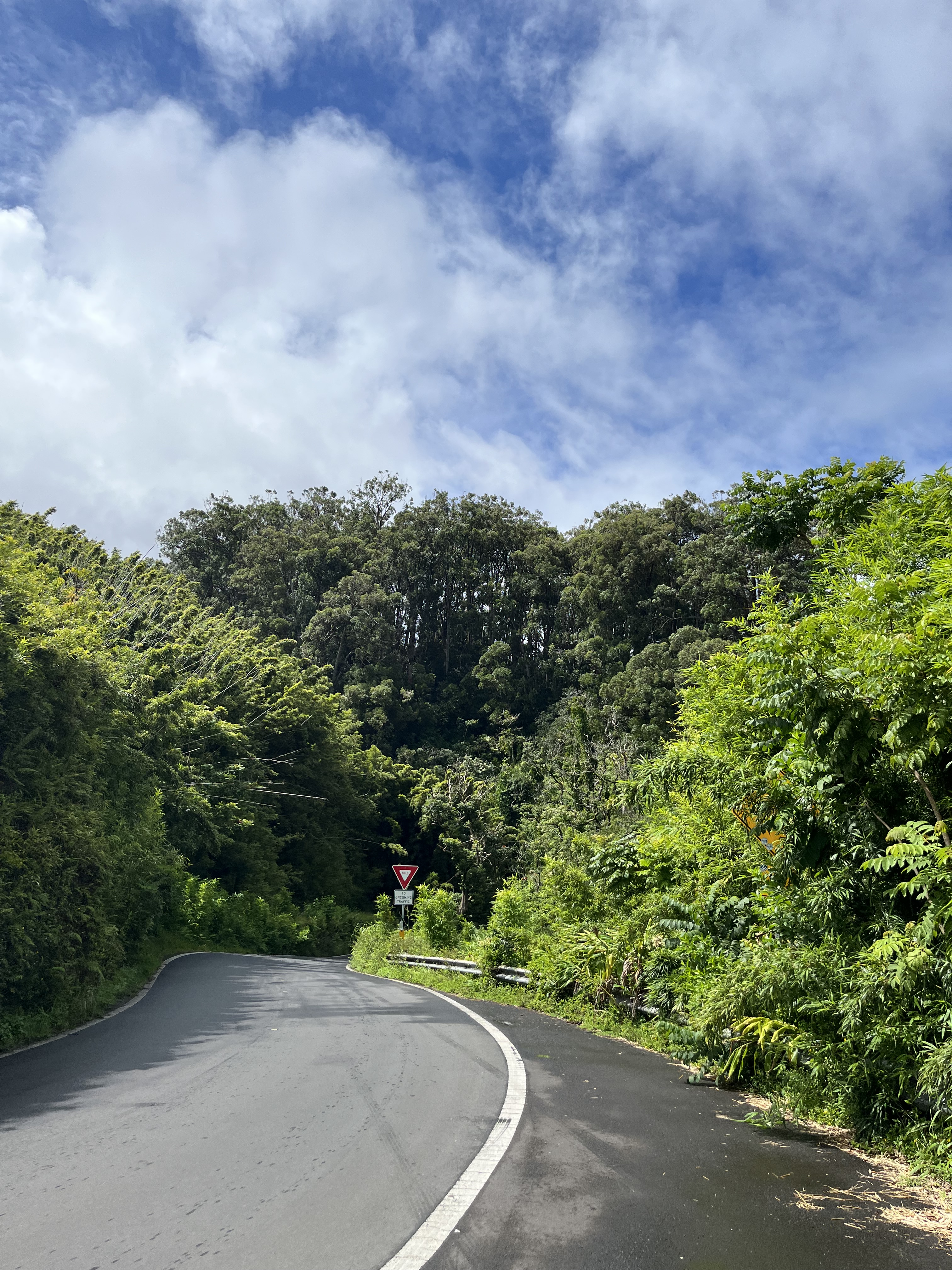
Curling around the east side of the island, the Road to Hana is a 64-mile stretch of narrow pavement crammed between mountain and ocean that takes upwards of six hours to complete. This is because the road consists almost entirely of tight switchbacks and one-lane bridges hugging the side of Haleakalā. While there are guard rails on the ocean-facing side of the road, you’re still looking down a good couple hundred feet at any given time. Further, the available space is so small that you’ll often have to stop and let the traffic coming from the other way go by first. Add to this the fact that the previously mentioned tradewinds hit the mountain and drench the area with flash-rain all throughout the day, which limits your visibility on short notice.
Sounds nerve-wracking, right?
When people were telling me about this drive (while with the same breath recommending I take a day to try it) I wasn’t sure I wanted to risk it. A mountain-jungle drive looking out over the ocean sounds great, and the narrow road on its own didn’t frighten me—but with other people on that road? Two-way traffic on a one-lane road? With how many of those drivers being tourists (and thus quite possibly idiots)? The physical conditions didn’t worry me; it was (as usual) the other people.
But I sucked it up and gave it a shot, anyway. And it was absolutely worth it.
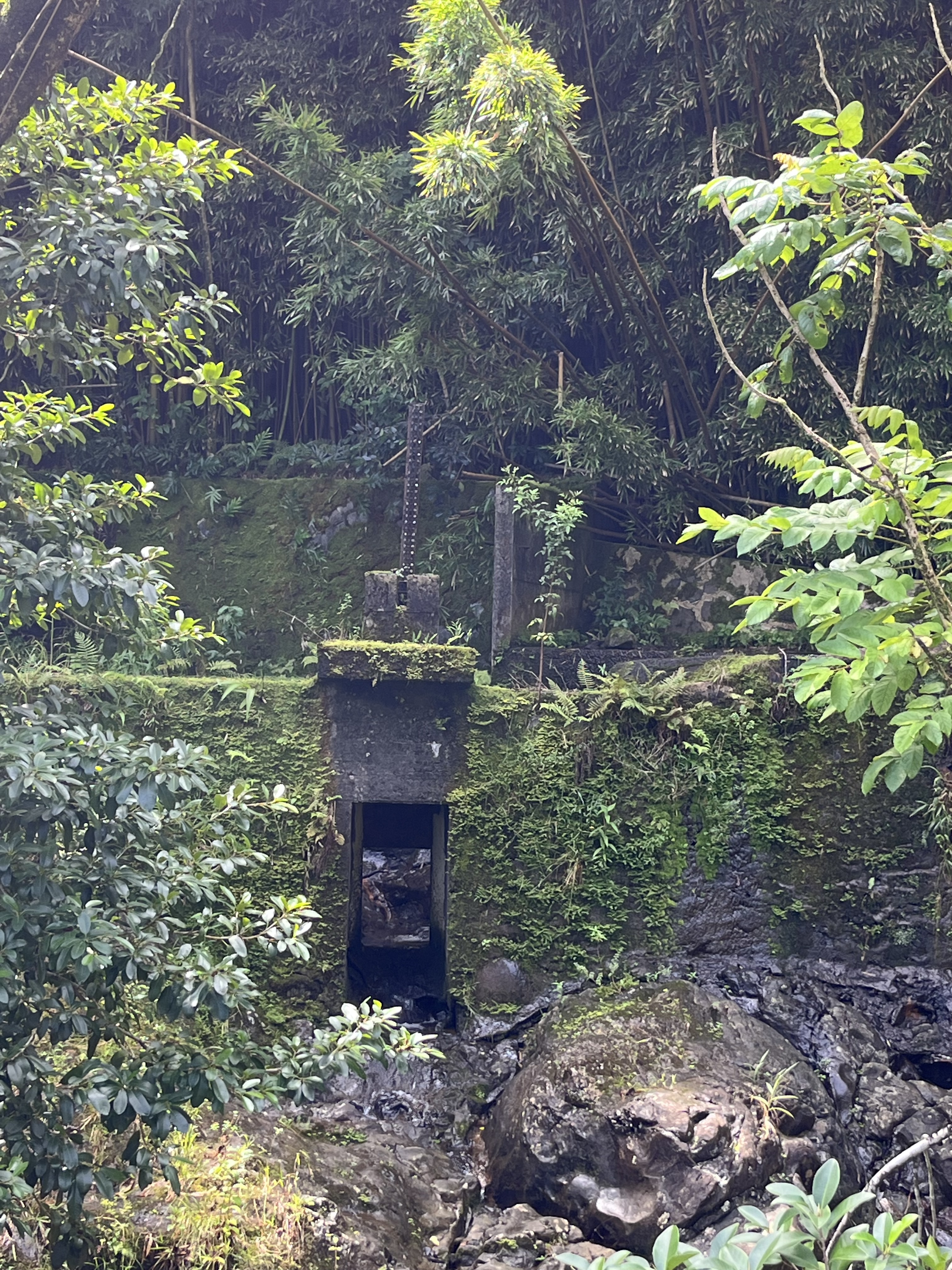
I can’t do it enough justice with words or photos, but it’s a gorgeous stretch. The lush jungle canopy falls over the road as you switch back and forth, alternating your views up the mountain and down toward the ocean and the occasional lower-lying towns. Since much of the northern stretch is part of the Kīpahulu District of the national park, there are preserved hiking areas that you can stop off at and walk around in. You’ll also spot ruins in the foliage (which excited my horror-writer heart):
And scattered along the route are the wrecks of crashed vehicles that either weren’t, or couldn’t be, towed out—serving as a reminder to pay attention to your surroundings.
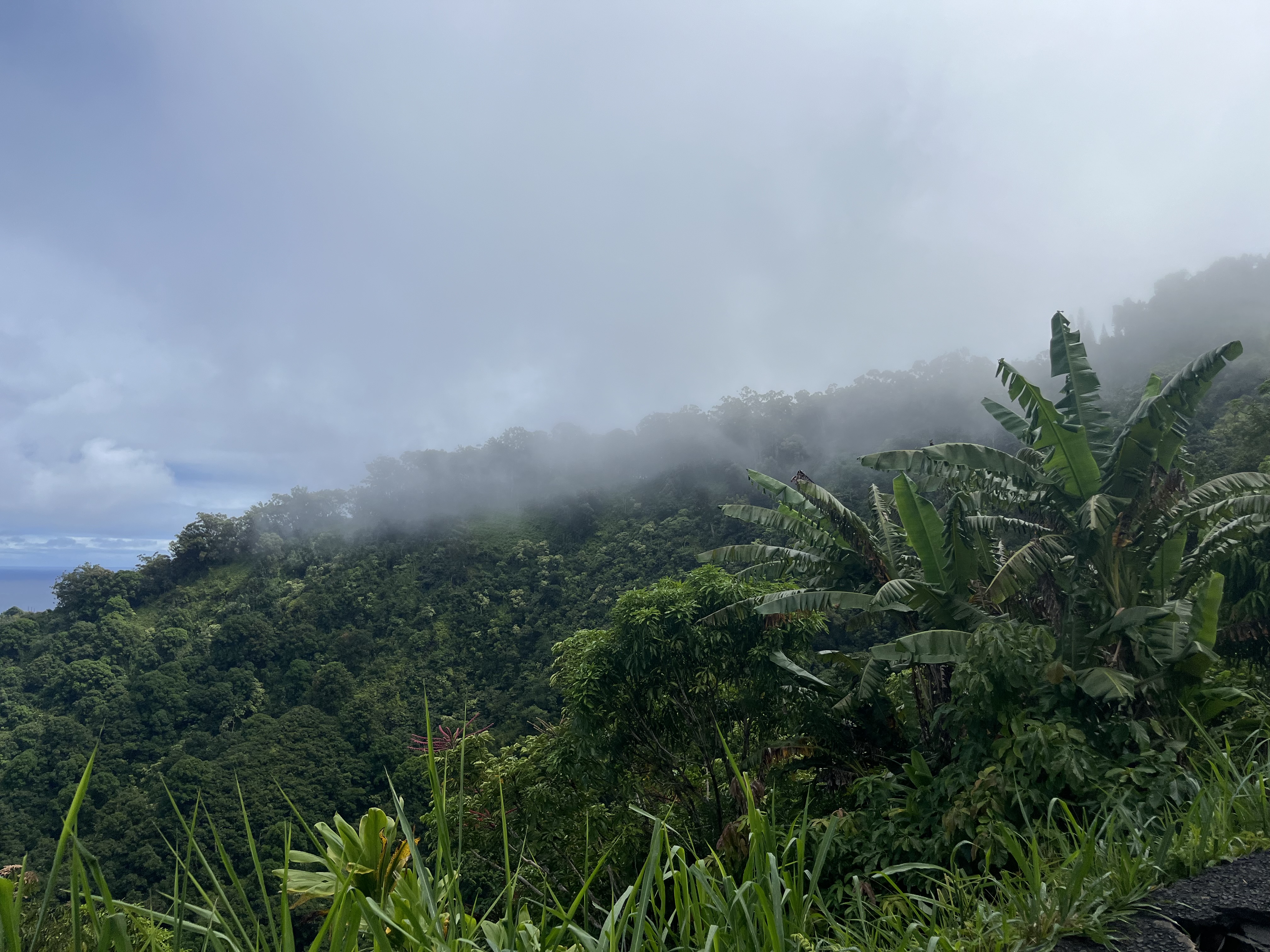
When the clouds roll over, it’s like being on the mountain all over again: suddenly overcast, but now with a quick downpour, and then clear and sunny again. It’s peaceful, watching the clouds roll over the mountain spurs:
And the other drivers actually, for the most part, follow the rules. When you come to a one-lane bridge, you queue up at the yield sign, and whoever got there first drives over, then the next person, and so on. Kinda like a four-way stop sign, but with less directions and higher stakes. Further, there are small areas off to the side where slower drivers can move over to allow faster drivers and the locals who use this road every day to pass. If you’re going to be extra cautious, then use these areas whenever someone is coming up behind you—it’s not just courteous, but also safer. And seriously, the locals have to deal with enough dumb tourists driving on that road every day, so if you’re in their way, just move over and let them pass.
The only real issue I had was just how exhausting it gets, paying constant attention in every direction for other cars and to make sure that you’re not about to hit a guardrail or a rock wall. And with the constant twists and turns, it’s easy to get nauseous. But overall, it’s a good reminder of how sometimes, in order to enjoy something beautiful, you have to put yourself at risk. I only had time for the first hour of the eastbound drive (and the hour coming back) but next time I’m going to visit the Hana Lava Tube, the Black Sand Beach at Waiʻānapanapa State Park, and the town of Hana itself.
And all the rest
Some other bits and pieces of the visit that are worth mentioning:
I had the best mahi of my life at Paia Fish Market in Kihei:

And while trying to get to Makena Beach, I overshot and wound up at ‘Ahihi Bay, a coastal lava field that is part of the ‘Āhihi-Kīna’u Natural Area Reserve. The black rocks that make up this area are the youngest rocks on Maui, the product of the most recent eruptions on the island (from about 500 years ago). The area is barren and rugged, with a trail leading from the parking lot to the bay that is marked less by the white rocks meant to indicate the path, and more by it being the only walkable part. It leads to what I’ve been told is one of the best snorkeling spots on the island, where you can see an abundance of sea life as far as a hundred feet out from the shore, all along the reef.
I stayed a night at the Maui Seaside Hotel in Kahului, which was a little pricey, but it’s a convenient location, with a pleasant lobby/common area, a poolside view of the bay, and at its restaurant I had one of the best fish dishes in my life:

It might not look like much, but this is bangus-silog, a Filipino breakfast dish consisting of milkfish, fried egg and garlic-fried rice. The fish was incredible, having as much to do with the marinade as with the natural flavor of the fish itself.
And since I’m me, I had to visit a Hawaiian brewery. We wound up at Mahlo Aleworks, which has a good selection of beers (I enjoyed the Rice Rice Baby and English Porter), a sausage/hotdog stand, a chill lounge area on the second floor, and a fantastic view looking across the center of the island toward the west mountains.
So, to no surprise at all, Maui is an awesome destination. The hiking and swimming is phenomenal, the food incredible, and the overall vibe pretty chill. However, if you are going to visit, I can’t stress enough how important it is to do your research on how to be a good tourist, and to keep in mind that you’re only a visitor—but if you act right and respect the land and its people, you can find a welcoming, fun destination to get away from it all for a while. I know I’ll be going back one day, and to some of the other islands as well.
 John Stadelman
Leave a comment