

There was a solid offering of new films this year, especially in horror (that renaissance remains in full swing, including honorable mentions like In a Violent Nature and Maxxxine), but there was some cool sci-fi as well.
I Saw the TV Glow
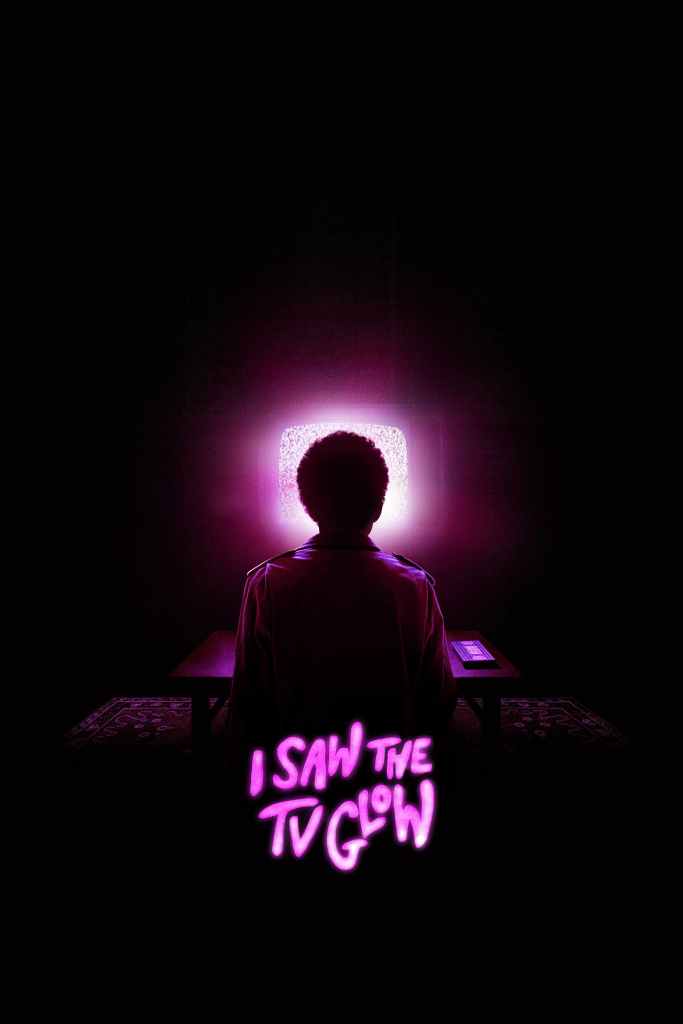
Starring the immensely talented Justice Smith, I Saw the TV Glow is a powerful commentary on gender, purpose and the agony of living one’s life under others’ expectations. Teenagers Owen and Maddie bond over their favorite TV show, a Buffy-inspired supernatural monster-of-the-week series called The Pink Opaque, only to realize as adults years later that the show isn’t what they remember… in fact, trying to remember it at all messes with their grip on reality. This leads them on a dark journey of self-discovery, in which the underlying truth of their lives is revealed to be a horrifying lie.
A moody, atmospheric slow-burn punch to the soul, I Saw the TV Glow is the kind of horror that focuses on building a creeping unease, one that burrows into you and leaves you uncertain, and unable to tell what is real and what is a mind-boggling lie—just as the main characters feel. The existential overtones alone are enough to leave anyone with a profound sense of unmooring, but it’s the transgender subtext that truly elevates this film, and what has turned it into an inspiring work of art for the trans community—as seen in the question, “When did you start to see your TV glow?”
Four and a half out of five luna juices.
Beetlejuice Beetlejuice
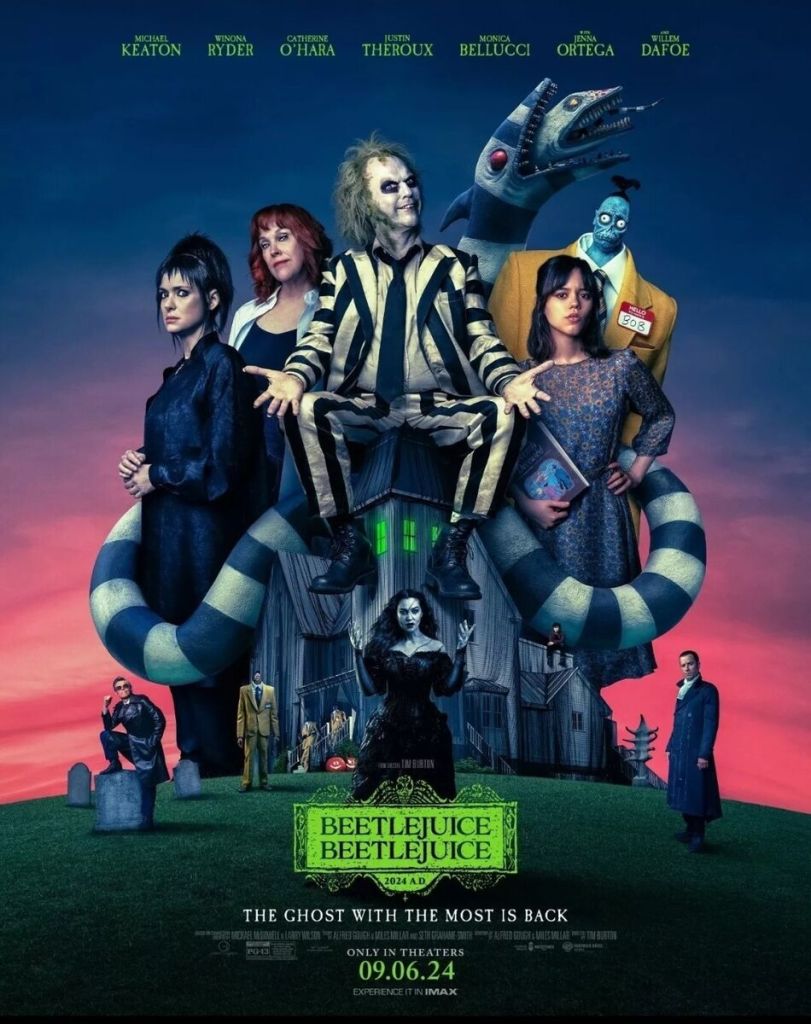
To be honest, I wasn’t expecting much from yet another sequel to an older movie, but this one did it right. Beetlejuice Beetlejuice doesn’t just keep the story of Lydia Deetz and the titular Beetleguese going, in some ways it actually exceeds the original, in terms of pacing and worldbuilding. The return performances by Winona Ryder, Michael Keaton and Catherine O’Hara are splendid, and Jenna Ortega’s addition is so perfect that you can’t imagine this movie existing without her. My only real complaint is that Monica Bellucci has far too small of a role, but at least there are some fun cameos throughout.
Four out of five Bobs.
Longlegs
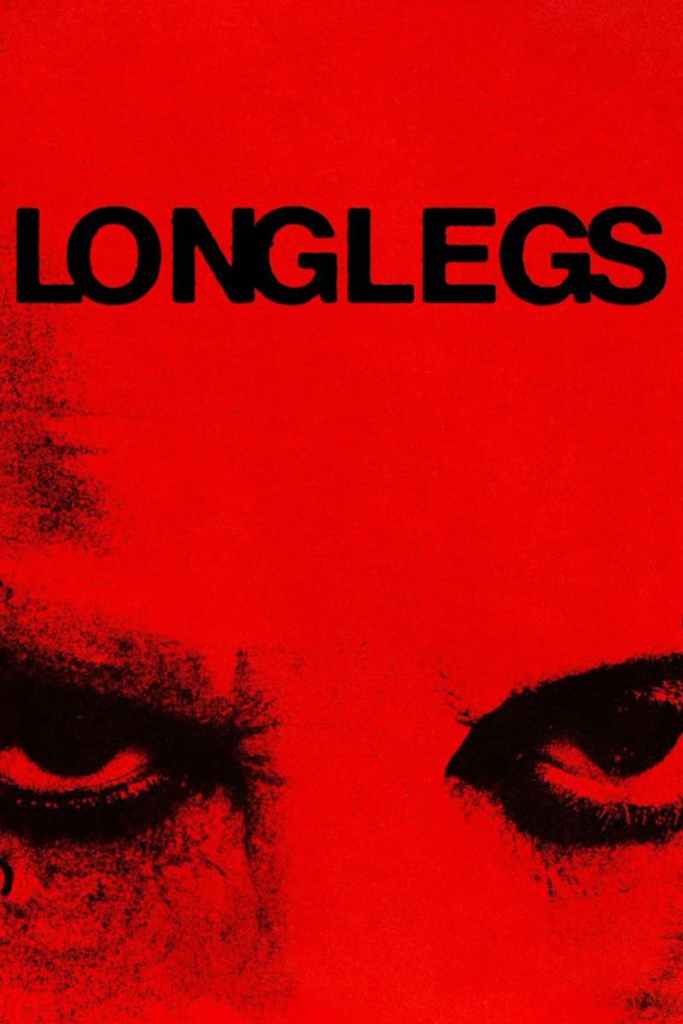
If you want a story about the FBI hunting a monstrous serial killer, but you thought that The Silence of the Lambs was too tame, then here you go. Maika Monroe plays clairvoyant agent Lee Harker, who is assigned to investigate the Satanic child-murdering serial killer Longlegs. Bleak, sparse, and overshadowed by a claustrophobic sense of impending doom, Longlegs is a harrowing descent into insanity and religious violence. Nicholas Cage’s portrayal of the killer is immensely disturbing, showing just how serious he can get when he tones down his craziness a little (yes, he’s actually able to convey crazy better by acting less crazy). However, it’s Monroe’s performance that carries the film along: understated but rich, it provides a positive autistic (or at least autistic coded) representation. The narrative worms its way into you until you realize that you’re too invested in the last fifteen minutes and that, despite what’s coming, you can’t look away—and it has one of the best closing lines of dialogue in film.
Four out of five creepy dolls.
Dune: Part Two
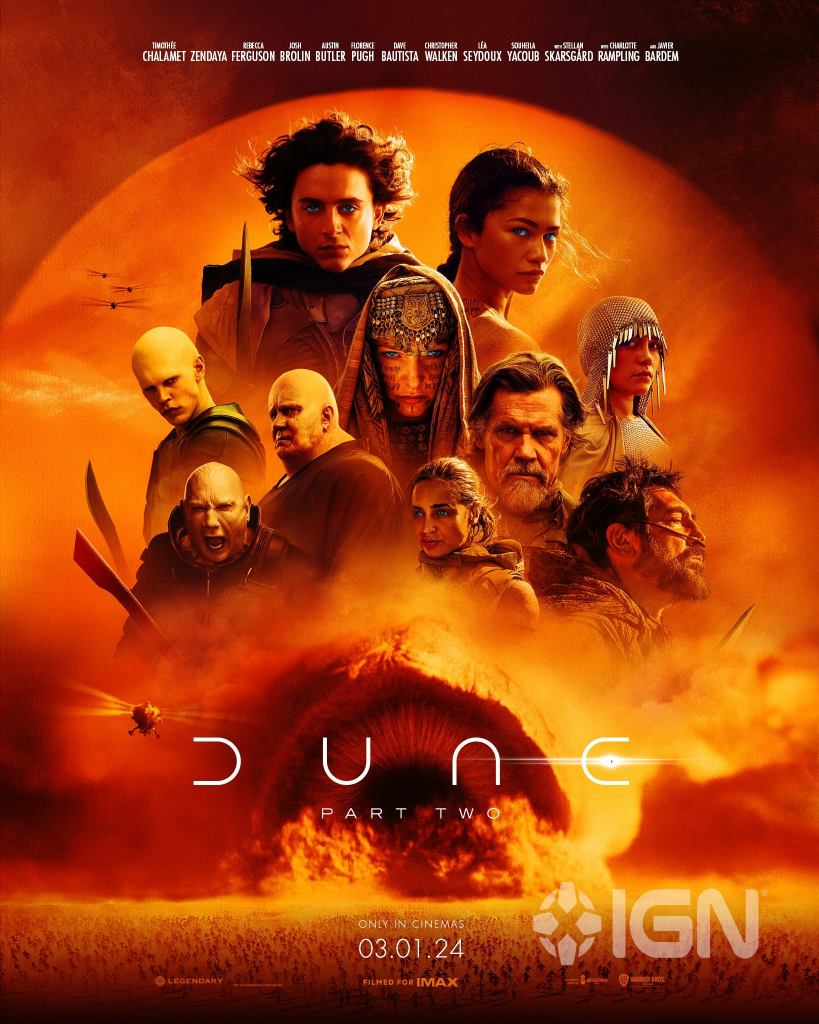
The epic follow-up to 2021’s Dune, completing the story of the original novel by portraying the war on Arrakis after Paul Atreides, lone survivor of his house and the prophesized messiah Lisan al Gaib, leads the native Fremen people to war against the oppressive House Harkonnen. The first movie was the setup for all of the payoff here: full-blown war between technologically advanced factions on a planet too dangerous to even walk on, due to the massive sandworms. The visuals are absolutely stunning (which is a given, being directed by Denis Villeneuve), with epic action sequences and moments that instill awe and horror, as we watch Paul become the most powerful living entity in the universe not just through his following, but as a product of multiple prophecies and insidious machinations.
The acting is impressive from the entire ensemble cast, but the absolute standout is Austin Butler as the psychopathic Feyd-Rautha Harkonnen (a character who was omitted from the first movie, so that he could be given more of a narrative and thematic impact in this one). Timothée Chalamet’s depiction of Paul’s rise to power (and coinciding fall into madness) displays his incredible acting skills, while performances by Zendaya, Rebecca Ferguson and Florence Pugh stand out as well.
On an interesting sidenote: This is a morally complicated story, one that doesn’t have a set good character. And so it’s funny (in a concerning way) to see that the response from some of the audience today mirrors that from the novel’s publication in 1965. Seeing that people were identifying with a certain protagonist who they very much shouldn’t be, Frank Herbert wrote the sequel Dune Messiah to hammer in the fact that you shouldn’t be rooting for anybody. It seems that we’re going to see some interesting reactions when the third movie, which will be based off the second book, comes out in a few years. None of this is a commentary on Dune: Part Two though—it’s just going to be entertaining to watch in real time.
Four out of five Lisan al Gaibs.
Image credits:
the Movie Database
Ebay
The Frida Cinema
IGN
 John Stadelman
Leave a comment