
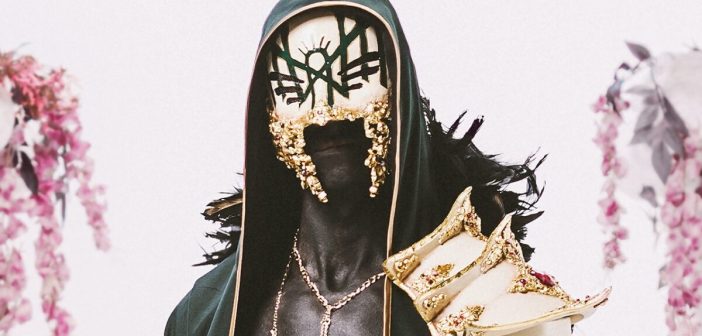
An Interpretation of Even in Arcadia
Introduction
About two months after its release, Sleep Token’s juggernaut new album Even in Arcadia has garnered near-universal acclaim, launching the band up to the top of multiple charts and crossing them over into the mainstream. It delivers an emotional kaleidoscope to us, using metal, R&B, rap, electronic and emo, not only moving the band in a new direction, but also pushing the limits of what post-genre music can be.
And as with every Sleep Token release, this album is also the next chapter in the cryptic, epic struggle between Vessel and the dark god Sleep. I’m going to present my interpretation of that story.
Short disclaimer: this being art, and Sleep Token’s enigmatic method of storytelling being what it is, I’m presenting what the story seems like and feels like to me. I’m not dedicated enough to fall into the rabbit hole of Sleep Token lore, but I don’t think you need to utilize every piece of the scattered puzzle. This is just what I think, and what I feel… and I’d love to hear your interpretations and what Even in Arcadia makes you feel.
So, let’s dive in.
Structure
The story has two throughlines, concerning the separate (but simultaneous) iterations of Vessel. One is the character in his ongoing battle against Sleep (this is the one we’ve been following across the previous albums), and the other is the man behind the mask struggling with the band’s newfound fame. I’ll be focusing mostly on the former, but it’s simplest to keep in mind that while Arcadia as a physical place represents a false paradise, it also stands for fame—in its idealized form versus its painful reality.
Focusing on the first throughline, the story is broken into five parts, delineated by songs:
1. Vessel’s arrival in Arcadia and his attempts to heal from the trauma caused by his relationship with Sleep (“Look to Windward” and “Emergence”).
2. Vessel’s euphoria at reaching paradise, having finally escaped Sleep (“Past Self”).
3. Vessel realizing that this paradise is false (“Dangerous” and “Caramel”).
4. Sleep finding him and using him, commencing their struggle all over again (“Even in Arcadia” through “Damocles”).
5. Vessel coming to accept that while he can never fully escape Sleep, he can still find peace in his life (“Gethsemane” to “Infinite Baths”).
1.
“Euclid” ends Take Me Back to Eden with Vessel still trapped in the abusive cycle with Sleep—the lyrical and compositional similarities to the last song on that album call back to the beginning of Sundowning, and so we leave Vessel unable to escape this parasitic relationship.
Even in Arcadia opens with Vessel in “Look to Windward” washing up on the shore of paradise, Arcadia:
“Now I know why I woke up here on the shoreline
Coughing up blood in the twilight”
He still struggles between wanting Sleep (“I’ve got eyelids heavy enough to crush diamonds”) or hoping the god will finally leave him alone. “Will you halt this eclipse in me?” he asks, which, an eclipse being symbolic for change, shows his fear that Sleep will come back—that it will halt the eclipse, it will prevent his life from changing, from moving away from it.
In “Emergence” Vessel realizes that while he’s made it to the gardens of paradise, he is still the twisted product of his years of abuse from—and yearning for—Sleep. He begs for Sleep to return, while also daring it to: “You know that it’s time to emerge … So go ahead and wrap your arms around me.”
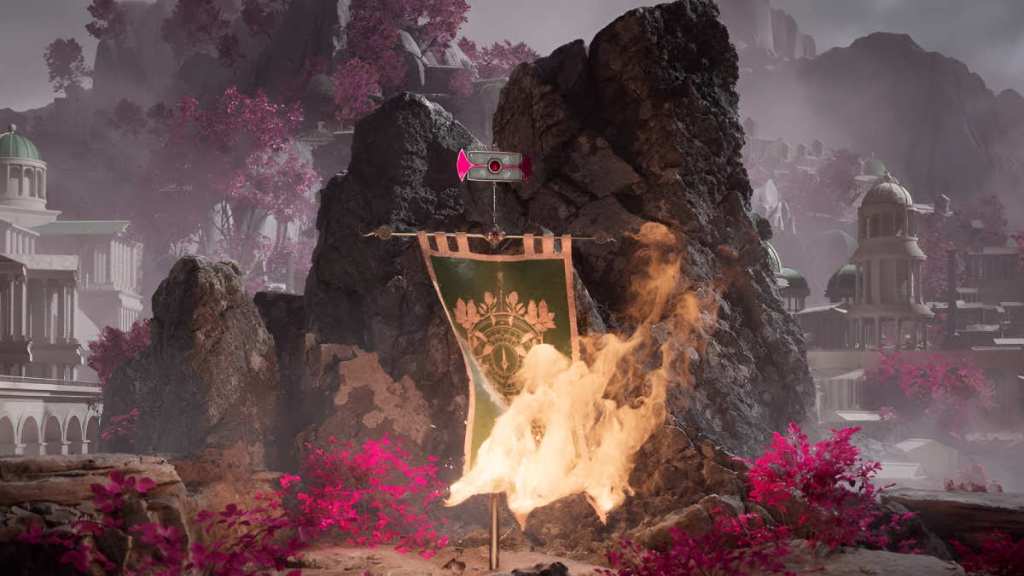
Arcadia is a concept that dates back to antiquity, generally depicting a pastoral, Eden-like utopia that has been lost forever. Like utopia, Arcadia is a paradox, something that couldn’t actually exist… as Vessel discovers later. His appeal in “Take Me Back to Eden,” to be taken back to Eden, seems to have been granted, or so he thought. Either way, he finds himself in the garden, and it’s glorious. Yet Sleep’s influence on him remains, straddling him with paranoia and the shadowy potential for violence. The darkness of the lyrics convey this, and the similarity in these opening tracks to the previous album reflect the god’s legacy contained within him still.
2.
So here Vessel stands, in paradise, free from Sleep—and here Vessel stands as the man behind the mask, on stage, beloved by hundreds of thousands.
The lyrics in “Past Self” can be interpreted as negative, but the upbeat melody (or upbeat for Sleep Token, at least) gives euphoric quality to the lines:
“And I don’t even know who I used to be
But nothing is the same and some things have to change now
Are you gonna dance on the line with me?”
He’s realized that finally, finally he has escaped Sleep—and he’s celebrating. He’s damaged, sure, but today he stands in paradise. He’s happy. He’s free.
3.
Except he isn’t.
Once the euphoria wears off, memories of his time with Sleep still haunt him, the god’s influence rising back up and tainting paradise.
“I wish I could have known that / Look in your eyes would echo in mine and go back,” he laments in “Dangerous.”
“Out of my mind, across the line
When was the last time I felt like this?
Dark desire and tainted bliss …
I might lose my mind
Back to back with oblivion
And you might breathe that burning breeze through
Paradise for me.”
He can feel the god searching for him, turning its eyes onto Arcadia.
“Caramel” follows, a track that on the surface is Vessel the man’s direct plea to the fans to back off, to give him, II, III and IV the privacy and anonymity they ask for. (You know the fanbase is really a problem if the band has to come out with a whole song about how shitty some of us are being.) Fame, then, becomes like Arcadia: utopian in its impossible perfection. In the same way, Vessel the character is learning that the reality of paradise is false, and his euphoria in “Past Self” was just a moment of foolishness, in which he believed that he could escape the darkness within, and without.
“I thought I got better / but maybe I didn’t,” he sings, closing out the song. He’s escaped from nothing.
And then Sleep finds him.
4.
“Come now, swing wide those gates,” Vessel sings in the title track. “Turns out the gods we thought were dyin’ were just sharpening their blades.”
The turning point arrives with “Even in Arcadia,” four minutes of utter despair brought on by melancholy strings. It’s a song that feels like giving up. Vessel’s world collapses around him and shows the false paradise for what it really is, as his abusive lover returns. “Have you been waitin’ long / for me?” it asks, in the form of a refrain that reflects how the god comes back again and again, an eternal promise of torment for Vessel: it will never leave him alone, it will never let him heal or move on.
“It seems that even in Arcadia you walk beside me still,” Vessel observes, and what begins as a dirge twists itself up into a horrific love ballad—one for his love of Sleep, and the inevitability of what this love will do to him.
This inverts the seemingly-steamy tone of “Provider” into a much darker anthem. On the surface, the six-minute baby-making song is sensual and hungry, the kind of thirst we’ve come to expect since “The Summoning.” But, considering that by this point in the story Vessel has despaired—and rejoiced—at Sleep’s return, lines like, “I wanna be your provider / Garner you in silk like a spider” take on a harrowing meaning. A spider doesn’t weave silk, and it certainly doesn’t do that to anything other than its prey… which is what Vessel has become, once again: trapped in the web weaved by Sleep. Everything the god croons into Vessel’s ear, “That bit of fuel to your fire, stoke your desire” is laced with possessive violence: “Just let me know that you’re mine.”
“Provider” is the only really sensual track on the album, compared to the lustful throughline of Take Me Back to Eden. It’s a callback to the previous album, to the cycle it represents. And so Vessel, tempted once more, falls back into Sleep’s web, even here, even in Arcadia.
In the aftermath of their initial reunion, Vessel spends the track “Damocles” pondering his helplessness, fearing that he’ll become a shell of himself once Sleep has finally taken everything from him. He asks himself:
“What if I can’t get up and stand tall?
What if the diamond days are all gone?
Who will I be when the empire falls?”
Damocles was a king in antiquity, who made an ambitious servant sit on his throne for a day, but with a sword dangling precariously over his head. This was in order to teach the servant of the danger that comes with power. Infused with the dark power of Sleep’s love once more, Vessel feels like a king—but one sitting under the sword of a monstrous god.
“No one else knows that I’ve got a problem,” he admits, in one of the album’s most devastating moments.
5.
Sleep leaves him again, and Vessel sits in the false paradise, in the agony of what was done to him, yet again. But this time, something is different. As hurt as he is, Vessel finds himself reflective, sitting in a penultimate state in “Gethsemane.” The garden of Gethsemane, in the Bible, was where Jesus spent his last night before his arrest and crucifixion. Vessel sits in a similar garden, Arcadia, approaching the end of the cycle—the anguish of abandonment, before once again convincing himself that he’s free. His emotions flow between despair and rage and longing:
“And I’m caught up on the person I tried to turn myself into for you
Someone who didn’t mind the push-pull parlour games
Someone who wasn’t always cryin’ on the journey back
Someone who didn’t feel the low blows either way
…
I was tryin’ my best
And that’s the thing I tell the mirror
I was in love with the thought
When we were in love with each other.”
This upswell of sentiment crescendos with the heartwrenching line, belted out like a revelation: “What might be good for your heart / Might not be good for my head.”
Then he asks this abusive lover, long after they’ve left: “Do you want to hurt me? / ’Cause nobody hurts me better.”
As the song settles down, and Vessel’s rage with it, the beginnings of a defeated acceptance filter in. “And I’ve learned to live beside it, and even though it’s over now / I will always be reminded.”
That reminder is that he’ll never escape Sleep, he’ll never be free of what it does to him.
Which brings him to the cleansing.
The epic finale, “Infinite Baths” is baptismal in tone, as Vessel’s post-abused reflections lead him to decide that while he may never be free, he can live within this curse. “Infinite baths / Washing over me at last” lead him to ask of Sleep: “Are you the method in my madness? / Are you the glory in my wrath?” He tells the god, “Well, I have fought so long to be here / I am never going back.”
And so perhaps he accepts that he can have Arcadia—some kind of goodness—even while Sleep hurts him. This sentiment, however, leads to Sleep’s explosive, violent return, expressed in the breakdown that rounds out of the song (and the entire album), as Sleep roars at Vessel:
“All this glory you did not earn
Every lesson you did not learn
You will drown in an endless sea.”
A sea like the one Vessel was drowning in during This Place Will Become Your Tomb. Like the one he washed up from in “Look to Windward.”
“Will you halt this eclipse in me?” Sleep screams at him, in mockery of the question he asked himself at the beginning.
“Teeth of God
Blood of man
I will be
What I am.”
And the cycle begins again.
The Unbroken Cycle of Sleep
This next section was informed by Glen Joseph Robinson’s videos on TikTok. He’s created a series of excellent videos breaking down the complex compositions of Sleep Token’s songs. Go check out his channel for his expert, detailed analyses, which are based on a lot of music theory that I won’t pretend to understand all that well, but that I’ll use just a little bit of, in order to discuss how the unbroken cycle is depicted musically.
The variations in time signatures for “Infinite Baths” and “Look to Windward” reflect each other1,2, particularly in how the breakdown of the closing song uses the exact same pattern as the introductory synths of the opener. Listen to the end of the “Infinite Baths” and then immediately start “Look to Windward” and you’ll never unhear it. Combined with the line “Will you halt this eclipse in me?” showing up at the end of “Infinite Baths” and then sliding into the refrain of “Look to Windward,” and the fact that Sleep ends the album by casting Vessel into the very same water that he washes up on at the beginning… we then see that this album is a cycle.
Just like the three-album cycle of Sundowning, This Place Will Become Your Tomb and Take Me Back to Eden before it.
Like Vessel, we thought that Even in Arcadia had broken through the loop that “Euclid” makes into “The Night Does Not Belong to God.” And that’s technically true: that three-album cycle is broken.
But only for a new one to begin:
(1.) Vessel washes up in Arcadia, and after some adjustment, (2.) realizes he’s free. But not for long, as (3.) paradise shows itself as false, collapsing around him when Sleep (4.) finally arrives. Sleep abuses him and then leaves, and he sits in false paradise feeling helpless and trapped. After reflecting in the aftermath, though, Vessel (5.) finds a way to accept his fate, deciding that he can still be happy even with Sleep… until the god returns, and hurts him, and casts him back into the water from which (1.) he washes up, in Arcadia.
The cycle doesn’t end, and Vessel will never be free.
The House Endures
Another set of metaphors exists to convey this fatalism, hinted at in lyrics such as “You know I live by the feather and die by the sword” (in “Look to Windward”) but seen especially in the advertising materials and visualizers for each song: House Veridian and the Feathered Host.
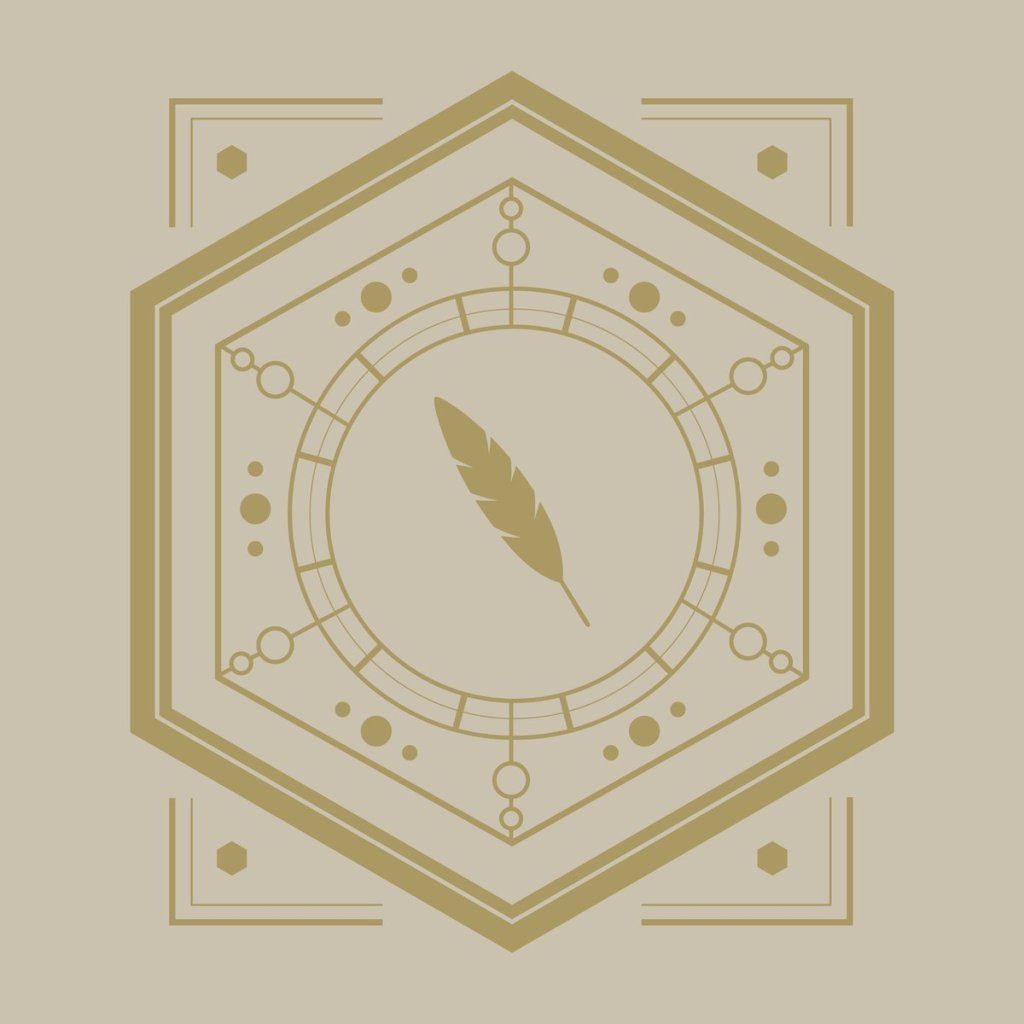
I admittedly don’t have much of an interpretation for this aspect of the story, and credit for much of this once again goes to Glen Joseph Robinson on Tiktok, as well as to the subreddit linked at the bottom of this post. But it appears that House Veridian and the Feathered Host are two factions in Arcadia. Interpretations among the fans mostly paint them as being at war, with House Veridian standing for traditional rule (seen through their motto, “The house must endure”) and the Feathered Host as a rebellious force rising up against them (their motto: “The cycle must end.”). However, at least one interpretation has them as two sides to the same coin.3 Vessel’s time in Arcadia, and his possible dualistic role in the war, might reflect this
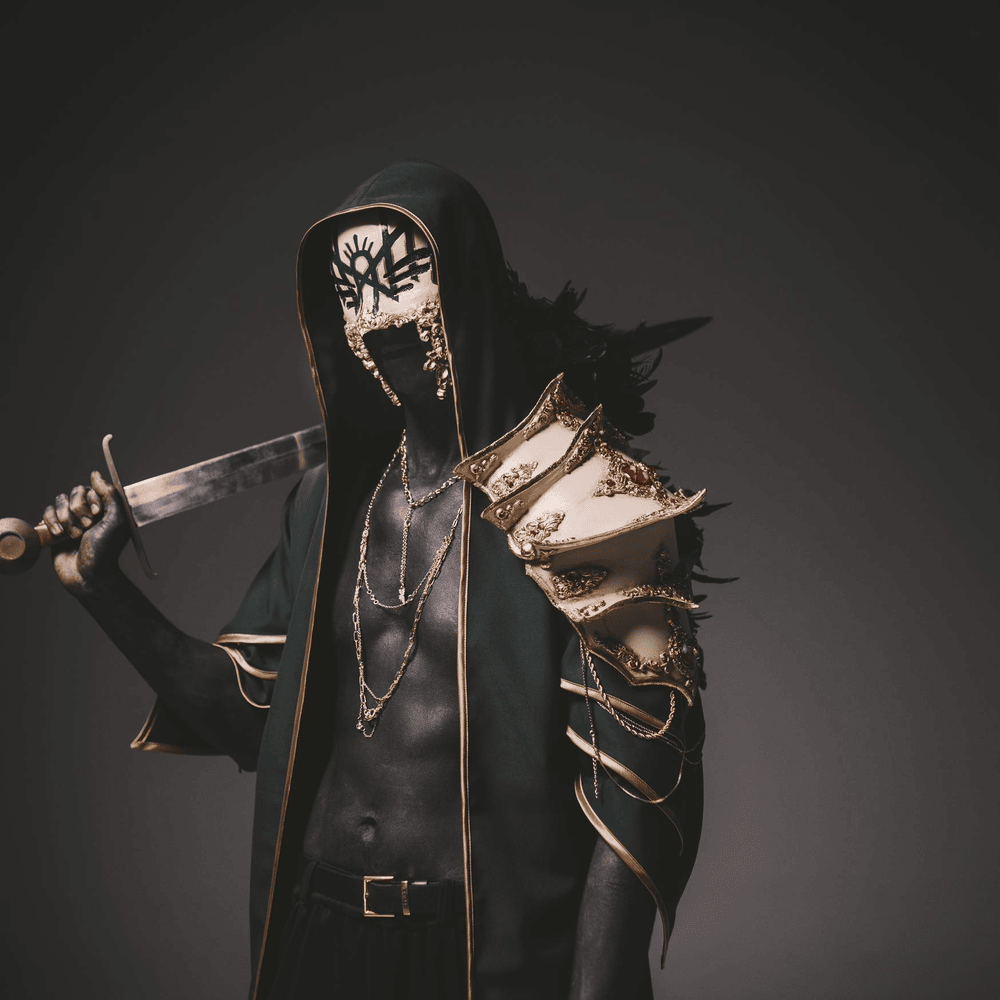
He seems to belong to both. In the promotional artwork, his robes have been dyed the green-blue of veridian, and he holds various swords—perhaps having become a knight or a warrior of House Veridian (although the sword itself calls back to Damocles). Yet, as previously mentioned, he states that he will “live by the feather and die by the sword.” The implied split allegiance begins to make more sense when we consider that tradition is the structure in which a cycle lives, so destroying tradition is the equivalent to breaking the cycle.
Such as the cycle of Sleep’s abuse of Vessel.
So, House Veridian is a metaphor-within-a-metaphor for Sleep’s abusive cycle, and the Feathered Host for Vessel’s attempts to break it. His belonging to both houses reflects his inability to break free from Sleep despite his desire to, not out of weakness as much as from his conflicted need for Sleep’s love—which is the weapon the god uses against him.
So, with the cycle remaining unbroken, it’s likely that the Feathered Host is defeated and tradition has won out. The cycle remains unbroken, and the House endures.
Except…
The Battle Continues
… for this.
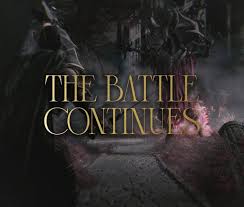
Depicting what is clearly Sleep facing off against a green knight (warrior of Veridian) in the garden, this was posted on the band’s Instagram a week after the album’s release. Speculation among the most hopeful fans is that Even in Arcadia is actually the first of a double album, with the next one set to drop sometime later this year.
However, if that’s not true and we’re getting just the one album (I say, as if this album isn’t already a masterpiece), it remains a powerful statement. Although he is still trapped in Sleep’s grip, Vessel (who is very much the veridian knight) continues to fight. And while it might be futile to do so in the armor of tradition, perhaps one day Vessel will remove it, and don the armor of the Feathered Host, and eventually triumph over the god.
Until then, he endures, he battles, and he doesn’t give up.
Here, read this, these wonderful nerds know a lot more about it all than I do:
1. https://www.reddit.com/r/SleepTokenTheory/comments/1klnvns/time_signatures/
2. For comprehensive, easy to understand analyses of many of the songs’ compositions, check out Glen Joseph Robinson’s videos on TikTok at @glenjosephrobinson.com
Photo Credits
Highlight Magazine
Wikipedia
Glam Sham
Wikipedia
Spotify
Genius
@houseveridan on insta
Metal Shell (Feathered Host) on X
threads.com
 John Stadelman
Leave a comment