
To absolutely no surprise, my top movies this year are all horror.
Considering that the genre is a commentary on the society it comes from, it’s no surprise how recently, much of our collective creative energy has gone into telling stories that make facing the dark easier, and more palatable.
Incredible horror isn’t always an indicator that the society that made it is in a fucked up place, but man has this been the case for 2025.
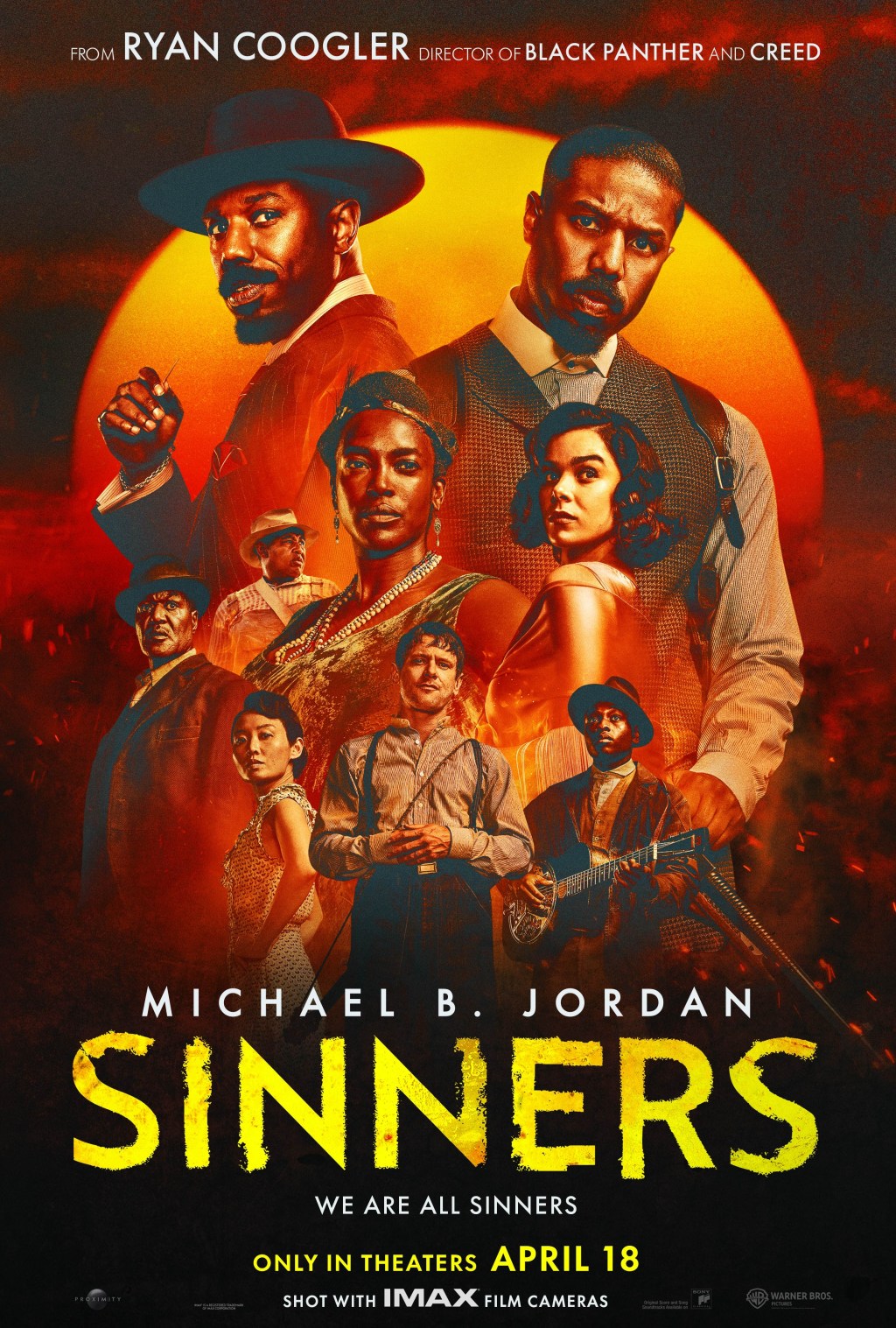
Sinners
Black Chicagoland gangsters, blues players, farmers and workers fight off vampires in a juke joint in 1930s Mississippi. Director Ryan Coogler uses this simple premise to explore the racial oppression of the Deep South, providing a blunt, yet nuanced and richly-layered depiction of how white American society constrains and deprives Black and Brown people while stealing from their culture, in a system that feels all too familiar today.
The blues are the primary way we see this: through musicians like protagonist Sammie (Miles Canton, in his debut role) and Delta Slim (Delroy Lindo) and the power the music grants them—in Sammie’s case, the griot’s ability to summon the dead, a power that draws the head vampire, a white man named Remmick (Jack O’Connell), to the juke joint. He wants Sammie’s power, and the ensuing siege is an attack on Black society and culture by those who trapped it there in the first place.
This is enhanced by the religious themes, the film’s commentary on the way Christianity was used as another means of control over African slaves and their descendants. Sammie’s fight against the demands of his preacher father that he turn away from the blues and to the church creates a tension between the constraints and control of the (perceived) holy, and the freedom of the night—a freedom that comes with a cost. Remmick’s identity resonates with this as well, being Irish, a people who, though white, were oppressed under Christianity as well. I can only imagine that Sammie’s push to escape his father’s religion is relatable to people who had to fight their way out of the churches they were forced to grow up in; I can say that his struggle to be allowed to play his music touches something in every artist.
But this is only one facet of this intricate, textured story. There’s the way that white-passing Mary (Hailee Steinfeld) navigates between two worlds, one white and one Black, and how her fate plays into the film’s white-capitalist metaphor for the vampires. Chinese shopkeepers Bo (Yao) and Grace Chow (Li Jun Li) add a further dimension to the racial politics in how, like Mary, they gravitate toward the Black community, despite their ability to move between worlds. Annie (Wunmi Mosaku) brings Hoodoo practices into the mix, while her relationship with one of Michael B. Jordan’s two roles, Smoke, humanizes the film’s coldest and most brutal character.
And speaking of, there’s the prime movers of the story, the Smokestack twins. Dual roles played by Michael B. Jordan, they act as foils to each other, allowing him to show off his incredible range. World War I veterans and Prohibition-era Chicagoland gangsters, even the subtle differences in their outfits (particularly their hats) tell us which gangs they belonged to, while the progression of the weapons used in a certain gunfight tell their story of their violent history.
There’s so, so much more to this film than I can get into here. People who are far more qualified than I am have discussed it and written about it with far greater nuance and depth, so I’ll leave it to them. But still, there’s the music. Man, the music.
Sinners isn’t quite a musical, but the narrative ties itself into music (especially the blues) in such an essential, masterful way. You couldn’t have this movie without it. The story of how the original tracks were made is fascinating by itself, and the griot scene when Sammie’s powers come out as he performs is one of the most creative, striking and cool sequences in film.
And on a side-note, there are some awesome Chicago tie-ins (beyond the Smokestack twins), including the perfect cameo at the end.
My only, and I mean only criticism is that the Choctaw vampire hunters don’t show up after their brief appearance. Even if they’d come back just for a moment, at the end, it would’ve been enough. But, it makes sense why they dip out and don’t come back. Still, a sequel, or mini-series, featuring these characters would be fantastic.
So really, my only issue with this film is that there wasn’t enough of something really cool in it. Other than that, it’s perfect. Not only do I think it’s the best horror movie to come out in well over a decade, but I think it’s one of the best films, period, to have been made in recent history.
Six out of five Buddy Guys.
Weapons
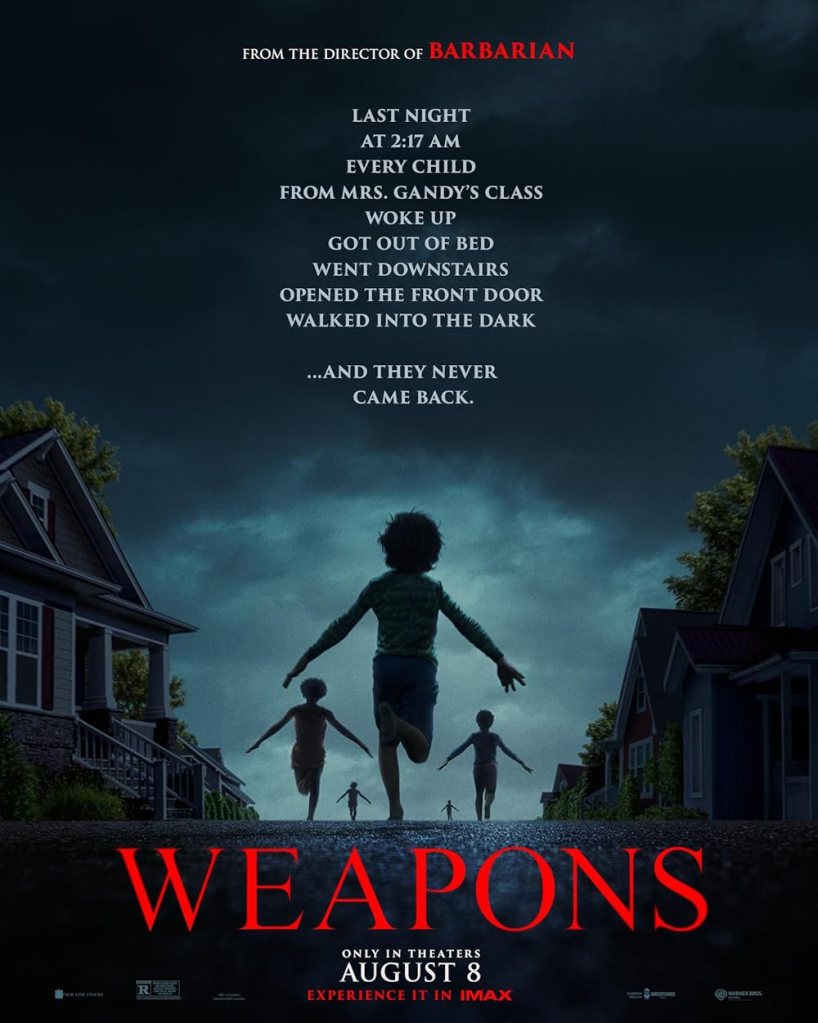
Coming on the heels of 2022’s disturbing, narratively-brilliant, fucked-up Barbarian, Zach Creggor’s Weapons is a startling, outlandish jigsaw puzzle that will have you repeatedly asking, from start to finish, “What the fuck?”
By the end, you’ll definitely know what, but the journey there is a fractured kaleidoscope that plays out, piece by piece, revealing the horrendous secret that’s playing out in this small Pennsylvania town. Third-grade teacher Justine (Julia Garner) comes to school one morning to find that every child in her class has disappeared, except for one. As the police investigation goes nowhere—and Justine finds herself the primary suspect, accused by the parents of the missing children of being a witch—one the parents, Archer (Josh Brolin) begins his own investigation.
What ensues: chaos.
Performances by Alden Ehrenrich and Austin Abrams provide an entertaining mid-story arc, and Benedict Wong is as fun to watch as ever. But it’s Amy Madigan’s depiction of a certain character that propels the unsettling, creepy, off-kilter feeling that pervades this film. Did I mention that it’s scary as hell? It’s scary as hell.
Five out of five sticks in a bowl.
Good Boy
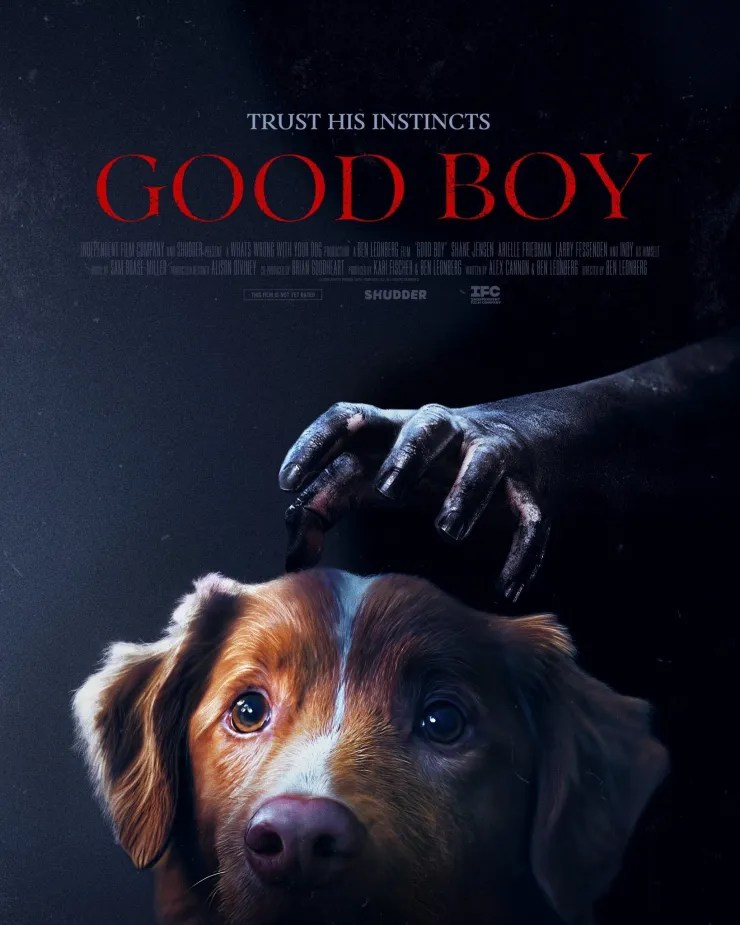
Every now and then a film comes out with a premise so simple and unique that you just know it’s going to be great. Good Boy is one of those films.
It’s a haunted house story from the dog’s point of view.
Even as someone who gets easily bored with haunting stories, I was keyed up with increasing anxiety watching this (but in that good, horror way) because while I can stand to see people get hurt in movies, I hate seeing something happen to the dog. (John Wick was justified.) This makes it so that every time the entity threatens Indy (our good boy) those like me are invested, we can’t take our eyes off the screen even though we know we probably should… we’re staring into the hallway, in the dark, not wanting to see what’s lurking in there, but also kinda wanting to. It helps that the entity itself is creepy as hell, rendered by a less-is-more approach that fills the dark corners and empty rooms of the house with a constant potential threat.
It’s even more impressive because this is an independent film, put together by a small cast. Indy, the star, is the director’s dog, and most of it was filmed in the director’s house in his free time. You can hardly tell, because of how well they pulled it off… but also because you’re freaking out every time the sun goes down on Indy and Todd (Shane Jensen), his owner.
Indy’s acting is great, in large part because he’s so expressive—every emotion reads across his face so that I believed in equal parts his moments of fear, excitement and happiness more than with some human actors. That being said, the performances from the other actors felt lacking—not in an obtrusive way, but it’s noticeable. (Except for Max, who plays Bandit, the other dog in the film—Max did perfect, just like Indy, no notes.)
If you feel the need to look up what happens to Indy before going in, then you probably should. I’m not going to spoil anything, but I looked it up first, because I wouldn’t have been able to handle not knowing on my first watch. What I will say, is that it’s going to shred your heart to pieces… and there’s more than one way things can play out, to make that happen.
But it will leave you running home to your dog, to love on them even more (if that’s possible).
Four out of five Indys.
Honorable mention
28 Years Later
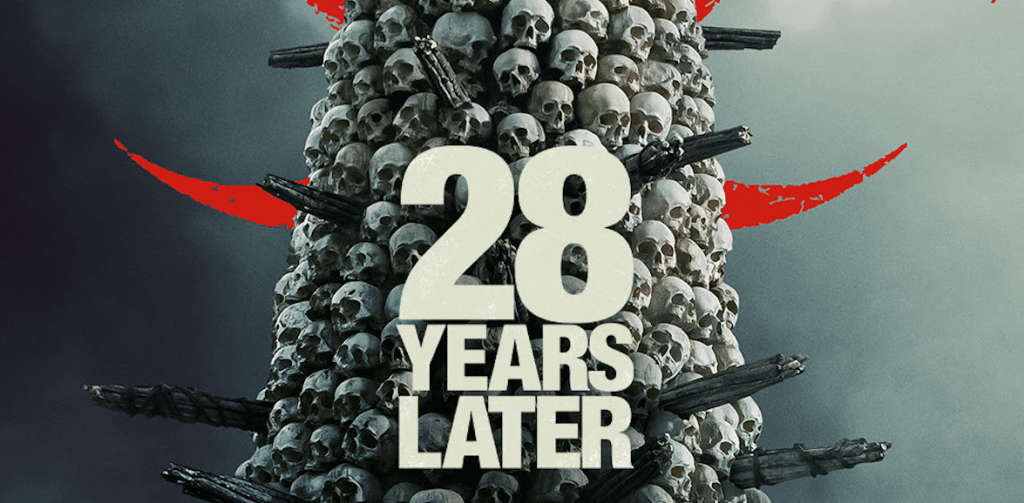
The real sequel to 28 Days Later, which sees the overdue return of writer-director duo Alex Garland and Danny Boyle, Years is an entertaining follow-up to the original. In some ways it transcends that original, feeling more like a character-based coming-of-age story than a blood-and-guts zombie tale. Explorations of parent-child relationships drive an interesting thematic subtext, while the new types of zombies are scary and Ralph Fiennes’ Dr. Kelson creates profound moments that blend the grim horror of the zombie apocalypse with a reverent beauty, a celebration of life and death.
Also, it leans into the weirdness, the off-kilter jaggedness of the original in a way that makes it truly feel like a sequel to Days.
This is the first of a planned trilogy, with the second entry, 28 Years Later: The Bone Temple set to come out in January. I’m excited to see where Garland and Boyle take these characters next.
Photo credits – Sinners: Rotten Tomatoes – Weapons: IMBD.com – Good Boy: Bloody Disgusting – 28 Years Later: Fangoria
 John Stadelman
Leave a comment