
I think I read more this year than I have since grad school… so it’s been a year well-spent. Here’s what I loved the most.
(Disclaimer: these are books I read in 2025, not books that necessarily came out this year.)
(Another disclaimer: I’ve kept the spoilers mild, and give a warning before each one.)
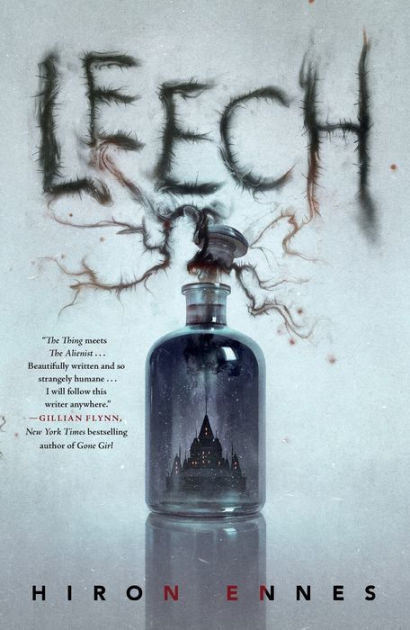
Hiron Ennes – Leech
This is one of those rare novels that is incredibly distinct, unique and memorable in every possible way. It’s a difficult one to talk about without spoilers, but: it’s been thousands of years since modern civilization collapsed, and humanity is slowly rebuilding, surviving on an Earth so ecologically devastated that entire oceans are toxic. One of the driving forces in the reconstruction effort is the Interprovincial Medical Institute. Crucial and irreplaceable (by its own design), it uses the medical knowledge of the past to keep humanity alive. However, when a lethal, highly-contagious parasite emerges from the mines of the far north, the Institute finds itself engaged in a battle not just for its own survival, but for that of humanity itself.
Or so it seems.
Leech weaves together elements of body horror, Wuthering Heights-esque gothic fiction and light sci-fi to craft a harrowing story set in a bleak future. What really sets it apart is its unique point of view. The novel is claustrophobic, paranoid, and utterly engrossing, dissecting the abuse of power at the institutional and interpersonal levels, as well as examining the malleability of identity and the drive within us to hold autonomy over ourselves. Hiron Ennes is a tremendously skilled writer, building a fascinating world and crafting an airtight narrative while also, on a technical level, showcasing a writing skill that few others can match.
Joe Vallese (editor) – It Came from the Closet: Queer Reflections on Horror
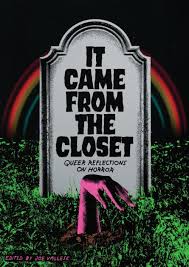
An anthology of twenty-five critical essays that analyze horror films from a queer angle, It Came from the Closet illustrates how the genre has always been coded in this way—whether it intends to be or not. By its very nature, horror explores the repressed parts of society, the fringes where its undesiredables are kept in the dark (and in the closet), and this makes it a haven for queer viewers who find themselves represented far more clearly—even if sometimes still subtextually—but in more robust ways than in other genres. The writers in this anthology often relate to the monsters, the outsiders who are often hideous, violent, condemned, misunderstood… and yet powerful. There’s freedom in the monstrosity, a rejection of societal norms and standards that is appealing not just to queer viewers, but to anyone who has never been allowed to join mainstream society, or who has willingly rejected it.
Part of that power is in how, like all horror (and like all art), monstrosity as outsiderness, as queerness, tells humanity about itself. As Prince Shakur, discussing the Brazilian film As Boas Manieras, writes in “The Wolf in the Room” – “Monsters do not only expose the good and bad parts of society; they also expose the character of those that come into contact with them.”
And the character of the society that has othered them has been found, again and again, to be lacking.
“The Healed Body” by Jude Ellison S. Doyle is a scathing and deeply insightful deconstruction of body horror through a transmasc lens, calling into question the depictions bodies in a non-cis state (mutating, or otherwise changing) as disgusting or monstrous, and how this reinforces a transphobic subtext. Zefyr Lisowski’s “The Girl, the Well, the Ring” attacks the representation of disability as monstrosity, or that physical appearance and ableism are tied to moral worth—a problem that affects all storytelling, but horror in particular.
And in “Both Ways,” Carmen Maria Machado shows us that the portrayal of bisexuality in Jennifer’s Body is far more nuanced and accurate than contemporaneous accusations of queerbaiting insisted on. (On a side note, Machado co-edited another essay collection that I read this year, called Critical Hits: Writers Playing Video Games, which was fun and insightful and that I recommend to anyone who wants to read deeper into storytelling in video games.)
Other standouts in this collection are:
Jen Corrigan’s “Three Men on a Boat,” discusses one of my favorite horror films, Jaws.
S. Trimble’s “A Demon Girl’s Guide to Life,” about The Exorcist (which is not one of my favorite horror films), presents a queer and feminist reading that turns the film’s morality on its head.
And “Good Guys, Dolls,” by Will Stockton, talking about Child’s Play, has one of the most succinct lines I’ve ever read: “Childhood trauma is a premature encounter with evil.”
It Came from the Closet is a smart, insightful dive into the horror genre. Personally, beyond getting to learn about this perspective on my favorite genre, I’ve found it a great resource for helping me write horror that isn’t homophobic or transphobic, either overtly or subtextually, intentionally or accidentally. I can’t recommend it enough to anyone who’s interested in this kind of read on the horror genre.
R.F. Kuang – The Poppy War Trilogy
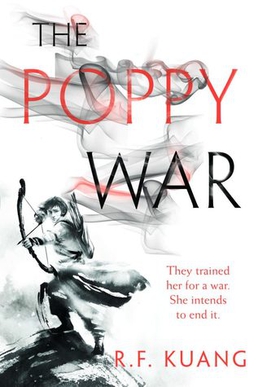
When I decided to get back into reading fantasy this year, I had no idea how great of a choice it would be to start with R.F. Kuang’s epic trilogy. Though set in a medieval-esque fantasy world (based off ancient East Asia, which is refreshing), the events are loosely inspired by the politics and warfare of midcentury China—from Japanese occupation through the Communist Revolution. That alone makes it fascinating, seeing modern-era geopolitics translated into an epic fantasy setting, but Kuang’s writing is what makes it superb. The complexities of war are depicted with unflinching honesty, with scenes of violence, carnage and depravity that rival even Blood Meridian (so, trigger warning: there are moments in this trilogy that are fucking dark). And yet, we understand why many of these characters are committing such horrors. The question that rises again and again is: How far is too far to go in order to save your people? In fighting the enemy, can you justify enacting the atrocities that they pioneered?
This is seen so well in Rin, the protagonist, who discovers that she’s a shaman: one of the few people in the world who can channel a god in order to use their magic. Her god is the Phoenix, which allows her to wield fire to devastating effect—but at an increasingly horrendous cost. Although this is Rin’s story and she is in many ways a likeable protagonist, and although everything she does is to save her people from foreign occupation, she is (mild spoiler alert) a monster. One with good intentions, yes… but even the best intentions can lead you down an evil path. Kuang doesn’t shy away from this, and doesn’t attempt to redeem Rin—in the eyes of the reader or in Rin herself—and in the era of storytelling where all too often “protagonist” is too closely attached to “good person,” it’s refreshing to read a bold work where this is not entirely the case.
Now, since this is an epic fantasy setting during a time of continuous warfare, we get treated to battles galore. While the first book does a decent job with them, those of the second and third books are intense, brutal and memorable, especially in the fights between shamans and technology like arquebuses and dirigibles, and in the role that realistic strategy plays battlefield maneuvering and in the siege warfare.
The characters are so well done—partiticularly (mild spoiler?) Kitay, Venka, and Nezha. Fucking Nezha. Like me, you’ll have your favorites, and your hates. And if you want a series where no character is safe, then this is for you. Your heart will get ripped out again… and again… and again.
My only real criticism is that the pacing feels uneven at times, in that some events move too quickly, and the narrative isn’t given time to breathe when it needs to. With each book being in the 500-600 page range, that can become difficult to navigate, but I feel like this easily could have been a five-book series, by splitting up the first and third books into two books each, and keeping the second book as it (it’s by far my favorite in the series, no notes). Pretty much, I’m saying that I wanted more of what was already there, which isn’t a bad problem to have.
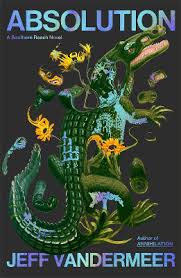
Jeff VanderMeer – The Southern Reach Series
This weird-ass series.
Years after an ecological disaster of unknown origin strikes part of the Florida coast, scientific expeditions controlled by a shadowy government agency are trying to study and understand this mysterious Area X: just what exactly happened here… and if it could happen again.
Combining cosmic horror and weird fiction with light sci-fi and a surprising amount of heart, these books ask a lot of the reader, but in the end, they give back so much more. VanderMeer provides a fascinating, complex portrayal of cosmic horror by using the ambiguity and fundamental unknowableness of the genre to its full effect; the narrative is winding and filled with holes, never giving the reader the full picture because there is no full picture. Just as the characters can’t understand the true nature of Area X, neither can the readers entirely comprehend what’s happening. Why does time move so much quicker in Area X? What is the moaning creature in the swamp, what do the bioluminescent words on the wall mean? And why do those few expedition members who manage to come back seem… changed?
On the initial read-through of the series, this winding ambiguity is sometimes irritating, but that’s the point—a risky writing move, but one that VanderMeer pulls off expertly. Mild spoiler, but you never actually find out what’s going on here—parts of it are confirmed, somewhat, but that leads to even more questions… which reinforces to us that Area X is beyond our ability to know. And to control. Again and again, attempts to harness this force only show how powerless we really are against a force as grand, patient and powerful as nature itself. And as inevitable as time.
This becomes clear throughout the original trilogy, but it’s in the fourth book, Absolution (a simultaneous prequel and sequel that turned the Southern Reach Trilogy into the Southern Reach Series) that the depths of our helplessness, and the sheer power of this force, is impressed on us.
In short: if you want weirdness and ambiguity, and one of the most unique depictions of cosmic horror (it’ll leave you feeling like an ant looking up at the sole of a descending shoe), then check it out. Be patient with it, and it’ll be worth it.
Elena Ferrante – The Days of Abandonment
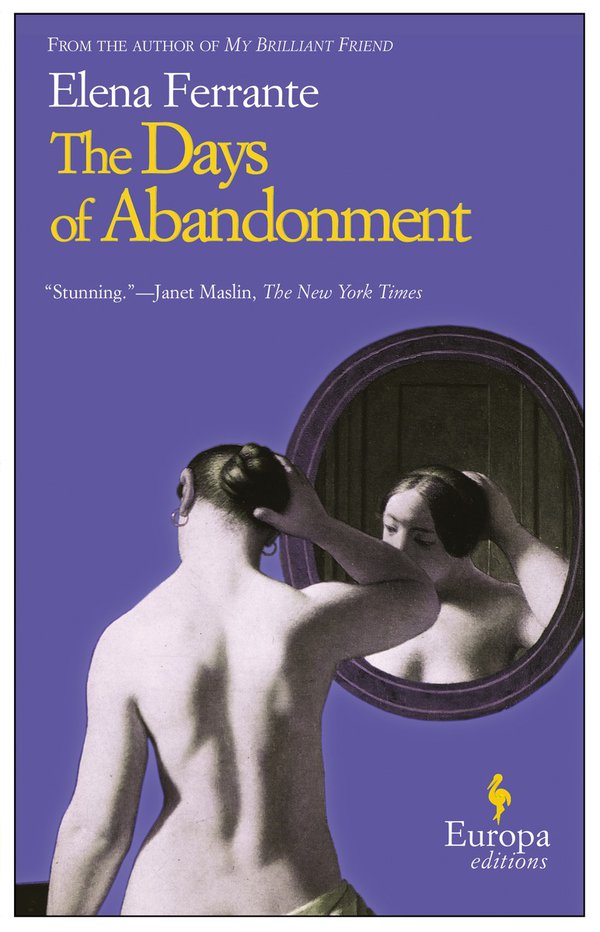
The Days of Abandonment is a harrowing depiction of one woman’s breakdown after her husband of fifteen years abandons her for a younger woman. Left to take care of their two young children alone, Olga struggles to balance this with work and housekeeping, all while suffering from depression and rage in the wake of being abandoned. Mild spoiler, but this is, ultimately, a triumphant novel (even if the premise doesn’t make it seem like it), in which Olga finds more strength and inner resolve than she thought she contained. But her journey is bitter, painful and heartwrenching.
Whereas Ferrante’s Neapolitan series (which I also loved) takes its time in a grand, sweeping manner to tell the story of two best friends’ lives, The Days of Abandonment is short and to the point, rapidly stacking problem after problem onto Olga to the point where she thinks she can’t handle it anymore—and then she does. Ferrante is an incredible writer, able to portray the nuances and subtleties of people and their relationships with each other with uncanny precision and insight, amplified by Ann Goldstein’s English translation. I haven’t read any other writer whose stories are so human.
This is a novel written by a woman for women, so I don’t feel qualified to talk about it in that regard other than to say that I’m sure plenty of women feel like Olga’s story is their own—not just of abandonment by their boyfriends or husbands, but of the neglect they’ve experienced throughout their lives. In that regard, men (especially straight men) need to read it, too. The depiction of a woman torn to shreds by the way her husband treated her is hard to read, to confront, because it’s so realistic and painful—showing us (men) just how damaging our shitty behavior can be to the women in our lives. This should be required reading in school for everyone, but especially for boys. Personally, I wish I’d come across it when I was younger, or that it’d been assigned reading in college or high school, but I’m glad I’ve read it now. If you’re a guy reading this post: read this book, even if it’s outside of your comfort zone. If you read in a lens of self-reflection, it will help you try to be a better man.
(Further, this is a great introduction to Ferrante’s work, and if you like you, I can’t recommend enough the four-book Neapolitan series.)
Honorable mentions
Josh Noel – Malört
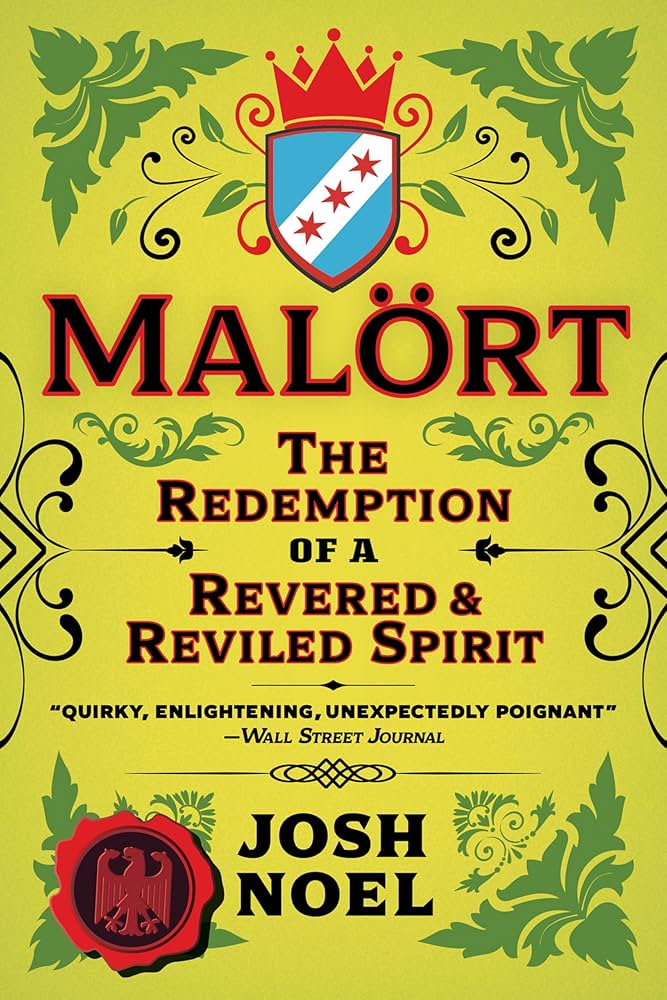
I love Malört. At some point after the first puke-inducing shot at McFadden’s (RIP), I’ve fallen for the, ah… distinct taste of this wormwood liquor. Malört is a short, entertaining history of the staple shot of Chicago drinking, from its humble origins when it was sold as medicine during Prohibition (because, as the police thought, nobody would actually choose to drink something that tastes this awful), to its time as a hobby enterprise for one Chicago businessman, through its time as a late-century industry secret and into its explosion in popularity over the past decade. In it is also a history of Chicago, reflecting its Swedish immigrant community, its midcentury industrial working class identity, and its current resurgence on the national and international stage. Though a little dull at times, it’s still a fun read for history buffs and booze lovers.
Dan Simmons – The Abominable
Following a disastrous expedition to Mt. Everest, a group of expert climbers attempts a rescue mission in the 1920s, decades before the mountain was summited. Blending extremely well-researched historical accuracy with action and adventure, this journey across Europe and Tibet pulls in mountain climbing, espionage, Brownshirts (pre-Reich Nazis) and something… well, abominable. This is a dense book (almost 700 pages) and while it’s entertaining, it does take a while to get going. I found some parts tedious (there are only so many detailed rock-climbing accounts that I can handle), and a particular element of the premise is somewhat misrepresented (but it’s hard not to talk about it without spoilers). For all that, though, reading this book feels like climbing a mountain—but in a good way. But if a deep-dive into the world of mountain climbing during a specific period of history, told through an adventurous lens, sound like fun, then this one’s worth it. Skimmable at some parts, but still worth it.
Photo credits: Leech: barnesandnoble.com – It Came from the Closet: barnesandnoble.com – The Poppy War: wikipedia.com – Absolution: wikipedia.com – Days of Abandonment: europaeditions.com – Malort: amazon.com – Abominable: amazon.com
 John Stadelman
Leave a comment