
So I’ve finished writing my next book, an eco-horror crime-thriller, and after months of intensive researching, writing, re-writing, cutting, consolidating, editing, trying not to add more (and usually failing), I’ve reached that point where I’m half-crazy from it (or like three-fourths, maybe even all the way gone, depending on who you talk to).
Intrepid writers be warned (or encouraged?), that while you absolutely should write that book you’ve been thinking about, you’re going go through some quirky shit while you do it. A literary rollercoaster. It’s a unique ride for each book, just like with this one.
For instance: you know when you’re reading a book and you get to that part, and you can’t go to bed until you’re done, and then the sun’s coming up? Imagine that, but you’re the one writing the book… so it becomes your responsibility, your duty, to finish it up now, regardless of the time of day (or night), social obligations, bills that need to be paid, dinner that should probably be eaten.
It’s even more intense if you’re the kind of writer who knows what’s going to happen, who knows what you’re building up to—it’s obsessive anticipation (you, the writer, knowing what’s coming and needing to get there) versus pleasurable uncertainty (the reader pushing into the unknown, desperate to experience this story to its end).
And all the while you’re hoping that if you, the writer, are compelled to dedicate this much time out of your day to finish writing the book once you reach that part, then readers should feel just as compelled to finish reading it once they get there, too.
But then, you’ll get hit by the cascade of uncertainties over some minor detail. Like when you’re trying to remember if you’ve already put said detail into the story earlier, because it’s suddenly become really important in this part, so maybe it should be planted really early on, but what if the readers won’t remember it, so then when you introduce it should you talk about it more, but then if you do it might be obvious that you’re planting something, but also maybe not because a whole lot of other stuff is going on but wait, is too much going on, or is it in the wrong place, or…
Except then you write something awesome, something you didn’t expect, a profound line or a scene that’s far more intense and distinct than you’d planned. So you think that, yeah, this book actually has a chance.
Until you get to a scene you’ve been anticipating, and it comes out flat.
Which I don’t find discouraging. It turns into a challenge, to make this conversation more intriguing, this spooky scene actually horrifying, this character death far more heartbreaking.
But one of the best moments is when you write out a scene, or a moment, planned or not, and it just… hits, in a way that you weren’t expecting. It’s insightful and deeply emotional, it touches something inside of you that you didn’t really know needed it, because it’s talking about your own personal shit but also not. (Because instead of writing directly about my problems, I manifest the same issue in a different way, then run my characters through it to see what happens.) So then, you just sit there for a moment thinking: Fuck, man. And then you know it’s going to resonate with at least one person who reads it, someone who’s going through it, too. Or maybe a completely different part of the book will have that affect on them because they’re dealing with other problems and some sentence, some passage, will touch that part of them. And maybe even help them, to at least understand their pain better.
That’s what I hope for, anyway, especially when I put so much emotion into my horror. You have to make yourself feel it, first, before you can hope to make others feel it, too. Something-something bleed on the page.
Tied into this is when you go back to sections that you haven’t looked at in forever, that you’ve forgotten about, and get excited reading back through it—the emotion, the action, the writing itself, any and all of it. This is the closest you can get to experiencing what the readers will when they go through your book for the first time. (It’s also why you should take at least a couple of months between drafts, so that you can clear your head enough to forget some of it, and come back half-amnesiac in order to rediscover it.)
On the opposite end of that, though, is when you’ve been so immersed in the story for so long that you don’t even catch something until you’ve stopped working on it, and realize out of nowhere (usually while trying to fall asleep) that an element of the worldbuilding doesn’t make sense, not in relation to the rest of it. A minor element, sure, but it needs to be fixed. Even though you’ve formatted and finalized everything. Even if you were going to go find something do to later today, after finishing up a certain blog post about writing this book.
But at least you caught it before you started querying out to agents.
Except… if you didn’t catch this problem until now, then how many others might be hiding in the manuscript, ready for everyone else to find?
Well, that’s what editors are for. No work of art is perfect, and it never should be. We’ll just fix it in post.
Still, it’s a little more daunting than an issue I ran into while working on the final draft: discovering that I’ve been using a word wrong. Not just in this book, but every single time I’ve ever used that word. In every novel. Every short story. Every query and submission. So then I’m Ctrl-F’ing my way through the manuscript with mounting horror (and self-disappointment of the professional kind), because while it’s not a common word, it’s one I should’ve figured out by now. I finally cleansed the manuscript, took a breath… and realized that I have dozens of short stories, and a completed novel or three, that might still have that word used incorrectly in them.
So screw working on the book today, now I’m Ctrl-F’ing through every short story (especially the ones I’ve already sent out to magazines) and book (whether finished or not), knowing that, at least, I’ve been mildly traumatized into never using that word wrong again. This word, at least. Because oh god, there are a whole lot of other words and what if I’ve been using them wrong too so maybe I should google “[word] definition” for every single one that I thought I understood the definition of but that’s kinda ridiculous but is it really because what if…
And no, I’m not going to say what the word was. But you’ll never see me use it wrong, that’s for sure.
Ctrl-F. I love Ctrl-F.
What I don’t love is how long it took to out the title. For this book, at least. When it comes to titles I either know what it is before I even start writing… or it takes forever to come up with one. There’s no in between. Guess how long it took, from writing the rough draft to going through successive rounds of editing, to figure it out for this 350-pager? Couple months? A year?
Three. Of them.
And it’s the first book in a series—which needs a title too.
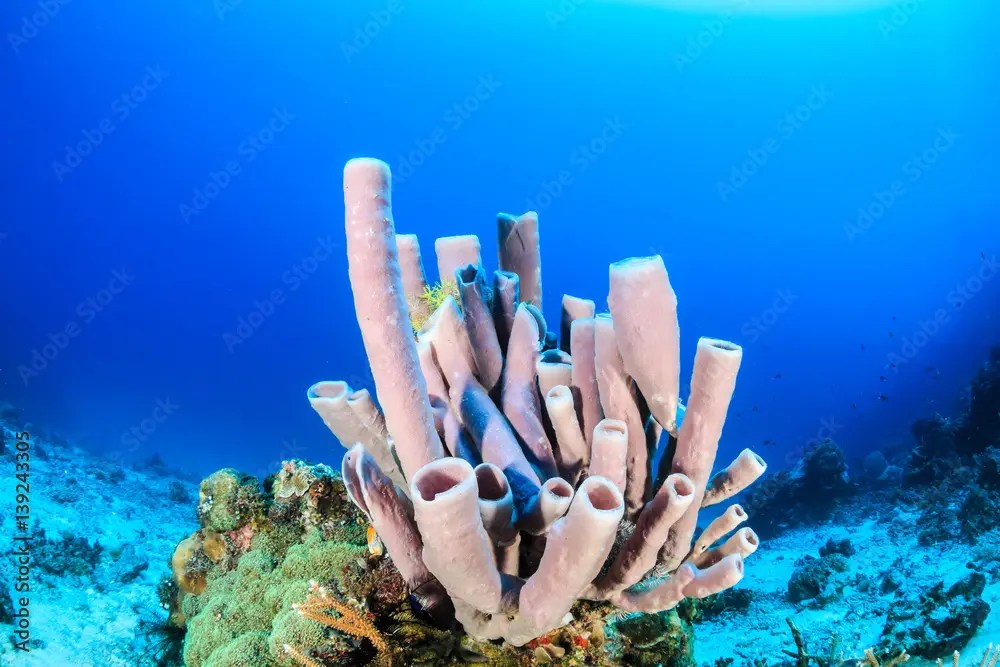
Funny enough, I figured out the series title right after the title of the first book. It’s catchy, a little intriguing, and it even ties into the themes of the series on not one, but two levels. So, I’ve written The Coral Mountain, book one of the Panarchy Series.
(Thus, the cover image of the tube coral.)
Then a few days later, I looked up the definition of a somewhat rare word in Margaret Atwood’s The Testaments, because it sounds gross but it also flows, and then, hey: it ties into the themes of my series, too. So the second book will have the word “pullulation” somewhere in it.
I might even maybe, kinda sorta have a half-formed idea for the third book’s title, as well. Something to do with “the fecundity.” Maybe.
So to recap: I went three years without a title for any of this, to having the title for the first book, then the overall series, then kinda for the second and third books in about a week, in a chain-reaction of creativity. Writer’s block becoming writer’s flow, I guess.
And I love that flow. If you’re an artist working in your established form (writing, music, anything), or trying out this creativity thing for the first time, I hope you get into that flow, because there’s nothing like it. For me, it’s when I’m writing (hell, I’m in it right now). From getting a new idea to the frenetic rough draft writing and researching, then round after round of meticulous editing… it’s exciting, fast, chaotic, wonderfully unhinged and sometimes frustrating. It drives me mad, has driven me mad, but I wouldn’t have it any other way.
And with this book done, and querying set to begin… it’s time to start on the next book, and do it all over again.
Photo credit: reeflings.com


Leave a Reply